Benefits of Automating Lead-Acid Battery Manufacturing
2026-03-26 16:03Table of Contents
1. Everyday Battery Issues and Manufacturing Links
2. Traditional Manual Processes in Lead-Acid Battery Production
3. How Automation Improves Battery Quality Control
4. Efficiency Gains from Automated Battery Assembly
5. Safety Enhancements in Modern Battery Manufacturing
6. Reducing Waste and Costs Through Battery Automation
7. Precision Technology in Lead-Acid Battery Lines
8. The Future of Reliable Battery Production
Everyday Battery Issues and Manufacturing Links
Lead-acid batteries keep cars starting, backup systems running, and industrial equipment powered every day. Yet many users notice the same frustrations: batteries that lose charge faster than expected, sudden drops in performance, or the need to replace units much sooner than planned. These problems rarely come from how the battery is used alone. They often start in the factory, where small variations in assembly can create weak spots inside the battery. When plates do not align perfectly or welds lack consistency, the battery struggles to hold power over time. This is why people searching for better battery solutions keep coming back to the manufacturing side. Automation directly tackles these root causes, turning out batteries that perform more reliably in real-world conditions without anyone having to guess about quality.
Traditional Manual Processes in Lead-Acid Battery Production
For years, lead-acid battery manufacturing relied heavily on workers handling each step by hand. Plates were stacked, connections welded, and cases sealed with limited tools and human judgment. While skilled teams could produce solid results, the process was slow and open to small mistakes at every station. A slight misalignment during stacking or an uneven weld could go unnoticed until later testing. These variations meant some batteries left the line stronger than others, even within the same batch. In a competitive market where buyers expect steady performance from every battery, manual methods simply cannot keep up with growing demand or tighter quality standards. The result is higher scrap rates and more time spent fixing issues that automation now prevents automatically.
How Automation Improves Battery Quality Control
Automated lead-acid battery assembly lines change the game by removing guesswork from critical steps. Machines handle plate alignment, inter-cell welding, and heat sealing with exact measurements every single time. Built-in sensors check for short circuits, reverse polarity, and leakage right on the line, automatically pulling any faulty battery before it moves forward. This level of consistent quality means fewer defects reach the customer and far less rework in the factory. Users benefit directly because the finished battery holds its charge longer and delivers stable power under load. When every battery meets the same high standard, trust in the product grows and replacement cycles stretch out naturally.
Efficiency Gains from Automated Battery Assembly
Speed matters in battery manufacturing, especially when orders pile up and lead times tighten. Automation lets a single line move raw materials through punching, stacking, welding, and testing stations without stopping for manual transfers. Intelligent conveyors keep everything flowing steadily, cutting cycle times dramatically. Manufacturers see higher production capacity per shift while using the same floor space. The process scales easily when demand rises, and output stays predictable day after day. For anyone who buys or specifies lead-acid batteries, this means shorter wait times and more reliable supply without sacrificing the battery's internal integrity.
Safety Enhancements in Modern Battery Manufacturing
Lead and sulfuric acid demand careful handling, and manual lines expose workers to these materials more often. Automated systems enclose hazardous steps, use robotic arms for heavy lifting, and limit direct contact to monitoring stations only. Automatic rejection of defective units further reduces the chance of handling faulty batteries that could leak or fail during later stages. The overall environment becomes cleaner and quieter, with fewer opportunities for spills or fumes. Factories stay compliant with stricter regulations while keeping staff safer and more focused on higher-value tasks. The end result is a battery produced under controlled conditions that also protects the people who make it.
Reducing Waste and Costs Through Battery Automation
Every rejected battery costs money in materials and time. Manual processes tend to generate more scrap because small human errors add up across thousands of units. Automation lowers defect rates through precise control, so less raw lead, paste, and plastic ends up as waste. Energy use drops too because machines run only when needed and recycle heat or materials where possible. Overall reduced operational costs let manufacturers offer competitive pricing without cutting corners on quality. For businesses that rely on large volumes of lead-acid batteries, this translates into lower total ownership costs over the battery's life.
Precision Technology in Lead-Acid Battery Lines
Modern automated lines include high-precision equipment for every major step: automatic hole punching, inter-cell welding inspection, terminal welding, and laser marking. Each station feeds data back to a central system so adjustments happen instantly if anything drifts. This closed-loop control keeps tolerances tight from the first plate to the final sealed unit. The battery that reaches the end user has uniform plate thickness, strong connections, and accurate electrolyte levels. These details might seem small, but they add up to longer service life and better performance under varying temperatures and loads. Buyers looking for dependable battery solutions notice the difference in real operation.
The Future of Reliable Battery Production
As demand for energy storage grows across industries, the ability to produce high-quality lead-acid batteries at scale becomes essential. Automation provides the flexibility to customize lines for different battery sizes while maintaining the same high standards. Intelligent software tracks every batch, predicts maintenance needs, and supports continuous improvement. Manufacturers can respond faster to market changes without retraining large teams or risking quality dips. The technology keeps evolving toward even smarter systems that integrate with broader factory networks. For anyone involved with battery selection or procurement, this shift means access to more consistent, longer-lasting products built with tomorrow's standards in mind.
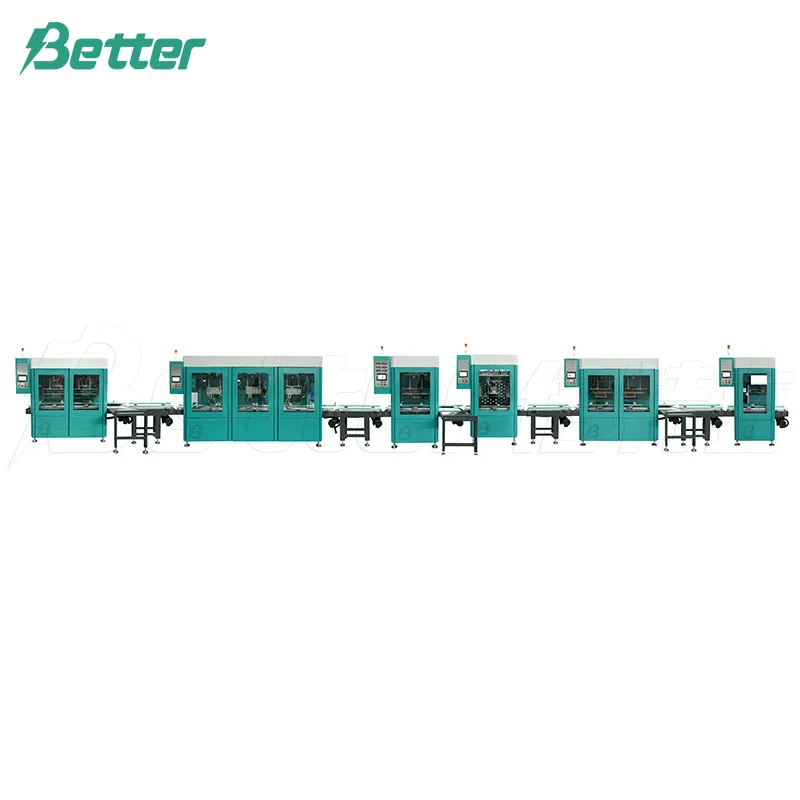
The Automatic Lead-Acid Battery Assembly Line brings all these advantages together in one intelligent solution. It features a steady conveyor system, high-precision testing for short circuits, welding quality, leakage, and heat sealing, plus automatic removal of any unqualified units. The line delivers stable operation, easy maintenance, and high productivity while giving manufacturers full customization for their specific needs. If you want reliable, efficient lead-acid battery production that raises quality and lowers long-term costs, this is the equipment worth considering right now.