


Why Curing Matters in Lead-Acid Battery Production
2026-01-22 14:16Table of Contents
1. What Battery Plate Curing Means
2. The Chemical Changes During Curing
3. How Proper Curing Affects Battery Performance
4. Problems That Show Up When Curing Goes Wrong
5. Temperature, Humidity, and Time: The Critical Controls
6. The Drying Stage After Curing
7. A Reliable Solution for Consistent Curing and Drying
What Battery Plate Curing Means
In lead-acid battery manufacturing, the plates start as metal grids coated with a wet paste of lead oxide, sulfuric acid, and additives. Right after the paste is applied, the plates are still soft and fragile. Battery plate curing is the controlled process that follows pasting. The plates are placed in an environment with specific temperature and humidity for a set period so the paste can harden and develop the right crystal structure.
This step is not just "waiting for the plates to dry." It's a deliberate chemical and physical transformation that locks in the properties the battery will have for its entire life. Without proper battery plate curing, the plates remain weak, the active material doesn't bond well to the grid, and the finished battery will underperform from day one.
The Chemical Changes During Curing
When the pasted plates are fresh, the paste contains mostly free lead oxide and some basic lead sulfates. During curing, moisture, heat, and oxygen trigger reactions that convert much of the material into tribasic or tetrabasic lead sulfate crystals.
These larger crystals create a strong, porous framework that holds the active material together and keeps it firmly attached to the grid. The structure formed here directly influences how well the plate can handle repeated charge-discharge cycles. Good curing produces plates with uniform crystal size and strong inter-crystal bonds, while rushed or poorly controlled curing leaves small, weak crystals that crumble over time.
The process also removes some free lead and reduces the risk of unwanted oxidation later in formation. In short, battery plate curing sets the foundation for mechanical strength and electrochemical efficiency.
How Proper Curing Affects Battery Performance
Well-cured plates deliver higher initial capacity, better charge acceptance, and longer cycle life. The strong crystal network resists shedding of active material, which is one of the main failure modes in lead-acid batteries. Batteries made from properly cured plates typically show 10-20% longer service life under the same operating conditions.
Capacity stability is another benefit. Plates that went through thorough curing maintain their rated capacity longer because the active material stays in place and remains accessible to the electrolyte. Charge acceptance improves as well—the battery can take a full charge faster and more completely, which matters for applications like automotive starting or deep-cycle storage.
Poor curing, on the other hand, leads to soft paste, lower capacity, and premature failure. The difference is noticeable even in everyday use: a battery with well-cured plates starts reliably in cold weather and holds charge longer between uses.
Problems That Show Up When Curing Goes Wrong
When temperature or humidity is too low, the reactions slow down and the paste doesn't fully convert. The result is plates with high free lead content, which can cause excessive gassing and self-discharge later.
Too high temperature or insufficient humidity causes rapid surface drying and cracking. The paste forms a hard skin while the interior stays soft, leading to poor adhesion and shedding during formation or cycling.
Inconsistent conditions across a batch create variation from plate to plate. Some plates perform well while others fail early, reducing overall battery reliability. These defects often only become obvious after the battery is assembled and put into service, making curing issues costly to fix.
Temperature, Humidity, and Time: The Critical Controls
The most common curing conditions are 60-85°C temperature and 95-100% relative humidity for 24-72 hours, depending on paste composition and desired crystal type. Higher temperatures favor tetrabasic crystals, which give better cycle life in deep-discharge applications.
Air circulation matters too—gentle airflow prevents condensation buildup while ensuring uniform conditions throughout the stack of plates. Modern curing chambers automate these parameters and monitor them continuously to eliminate human error.
Many manufacturers still use simple rooms with steam injection and basic heaters, but these setups struggle to maintain tight control, especially at larger scale. Small deviations accumulate and affect yield.
The Drying Stage After Curing
Once curing is complete, the plates contain bound water in the crystal structure but also free moisture that must be removed before formation. The drying phase gradually reduces humidity and raises temperature to drive off this water without cracking the plates.
Rapid drying causes thermal stress and surface cracks; slow, controlled drying preserves the porous structure built during curing. A combined curing and drying chamber can transition smoothly from high-humidity curing to low-humidity drying in the same enclosure, reducing handling and contamination risk.
Properly dried plates have low residual moisture—typically below 1%—which prevents issues during the subsequent formation charging step.
A Reliable Solution for Consistent Curing and Drying
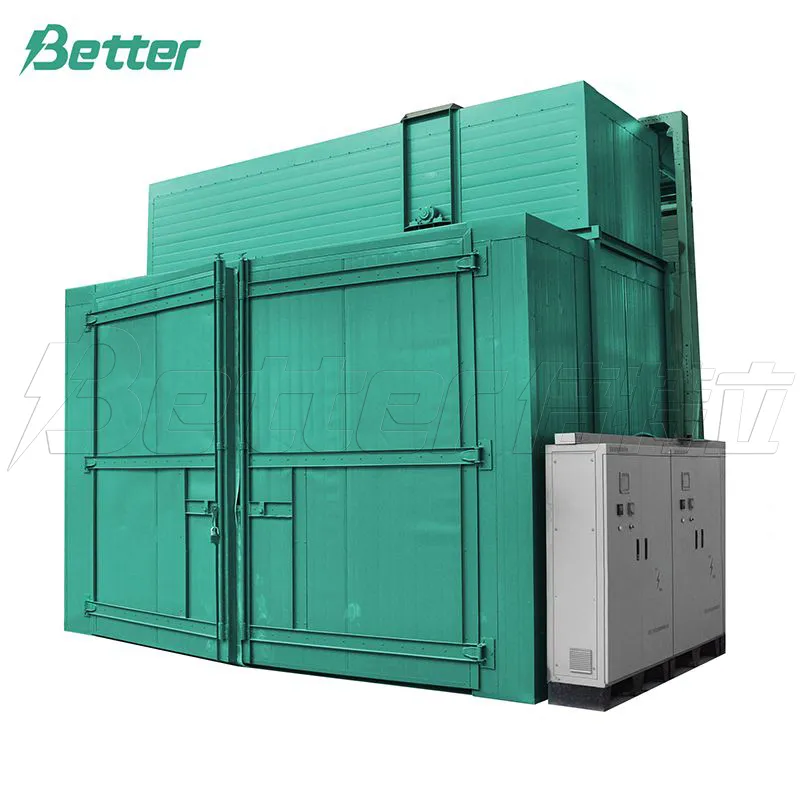
For manufacturers who need repeatable, high-quality results without constant manual adjustments, a dedicated battery plate curing and drying chamber offers clear advantages. The equipment from Better Tech provides precise control of temperature, humidity, and airflow throughout both curing and drying phases.
Automated programs maintain optimal conditions for different plate types, reduce energy consumption compared to makeshift rooms, and minimize batch-to-batch variation. The design supports high throughput while protecting plates from contamination. Operators spend less time monitoring and more time on other production steps, and yield improves because fewer plates are rejected due to curing defects.
If consistent plate quality and efficient production matter to your operation, this type of chamber is worth considering as a direct upgrade to traditional methods.