What Is a Gel Battery and How It Works
2026-01-23 14:05Contents
1. What Is a Gel Battery
2. Internal Structure
3. How It Works
4. Key Advantages
5. Common Uses
6. Maintenance Tips
7. Comparison with Other Batteries
8. Choosing the Right One
9. Production Equipment
What Is a Gel Battery
A gel battery is a type of sealed lead-acid battery where the electrolyte is mixed with silica to form a thick, gel-like substance. Unlike traditional flooded batteries that use liquid acid, the gel holds everything in place and prevents spills. This design makes gel batteries completely maintenance-free—you never need to add water or check acid levels.
People often search for gel batteries when they need reliable power in situations where a regular battery might leak or require constant upkeep. They are popular in off-grid setups, backup systems, and equipment that moves around a lot.
Internal Structure
Inside a gel battery, you'll find the same basic components as other lead-acid batteries: positive and negative plates made of lead, separators between the plates, and the electrolyte. The difference is that the electrolyte is immobilized as a gel. The plates are usually tubular or flat, depending on the design, and the case is fully sealed with safety valves to release excess pressure if needed.
The gel fills all the space around the plates, keeping the chemical reaction stable even if the battery is tilted or vibrated. This structure is what gives gel batteries their reputation for durability in tough conditions.
How It Works
Gel batteries operate through the same lead-acid chemistry as other types. During discharge, lead dioxide on the positive plate reacts with the sulfuric acid in the gel to produce lead sulfate and water, releasing electrical energy. When you charge the battery, the process reverses: electricity forces the lead sulfate back into lead dioxide and restores the acid strength.
The gel slows down the reaction slightly compared to liquid acid, which actually helps extend plate life by reducing corrosion. Oxygen produced at the positive plate recombines with hydrogen at the negative plate inside the sealed case, so almost no gas escapes. This internal recombination is why gel batteries are classified as valve-regulated lead-acid (VRLA) batteries.
Key Advantages
Gel batteries stand out for several practical reasons. They are leak-proof even if the case cracks, making them safe for indoor use or sensitive equipment. They handle deep discharges better than many alternatives—often down to 80% depth of discharge without serious damage. Vibration resistance is excellent because the gel keeps plates firmly in place.
Temperature tolerance is another strong point. Gel batteries perform well in both hot and cold environments, with less capacity loss than flooded batteries in extreme heat. They also have very low self-discharge rates, typically 1-3% per month, so they stay ready for long periods without use.
Common Uses
You'll find gel batteries in solar and wind power storage systems where daily cycling and occasional deep discharges are common. They power electric wheelchairs and mobility scooters that need reliable performance over uneven terrain. Marine applications like boats and yachts use them because they won't spill in rough seas.
UPS systems in data centers and hospitals often rely on gel batteries for backup power. Telecom towers in remote locations benefit from their low maintenance and temperature resilience. Golf carts, floor scrubbers, and RV house batteries are other everyday examples where users value dependability over long periods.
Maintenance Tips
Although gel batteries are marketed as maintenance-free, proper care still extends their life. The most important rule is to use a charger specifically designed for gel batteries. Regular lead-acid chargers can overcharge and dry out the gel, permanently reducing capacity.
Keep terminals clean and tight to avoid voltage drops. Store batteries in a cool, dry place when not in use. Avoid exposing them to temperatures above 50°C for extended periods, as heat accelerates aging. If you cycle the battery regularly, monitor voltage occasionally to catch any cell imbalance early.
Comparison with Other Batteries
Compared to flooded lead-acid batteries, gel batteries cost more upfront but eliminate watering and acid handling. They last longer in deep-cycle applications and work in any orientation.
Against AGM (absorbed glass mat) batteries—another VRLA type—gel batteries generally offer better deep-discharge recovery and heat tolerance, while AGM batteries charge faster and deliver higher current for starting applications. Both are sealed and maintenance-free, but gel is often preferred when vibration or extreme temperatures are concerns.
Lithium-ion batteries outperform gel in weight, cycle life, and charge speed, but they remain significantly more expensive and require sophisticated management systems. For many budget-conscious or safety-focused users, gel batteries strike a practical balance.
Choosing the Right One
Choose a gel battery when your application involves deep cycling, vibration, temperature extremes, or positions where spills would be disastrous. Look for reputable brands with clear capacity ratings in amp-hours (Ah) and specified cycle life at your expected depth of discharge.
Check the recommended charge voltage—usually around 14.1-14.4V for a 12V battery—to ensure compatibility with your charger. Capacity should match your daily energy needs plus a safety margin. If weight is critical, compare against AGM or lithium options, but for pure reliability in harsh conditions, gel often wins.
Production Equipment
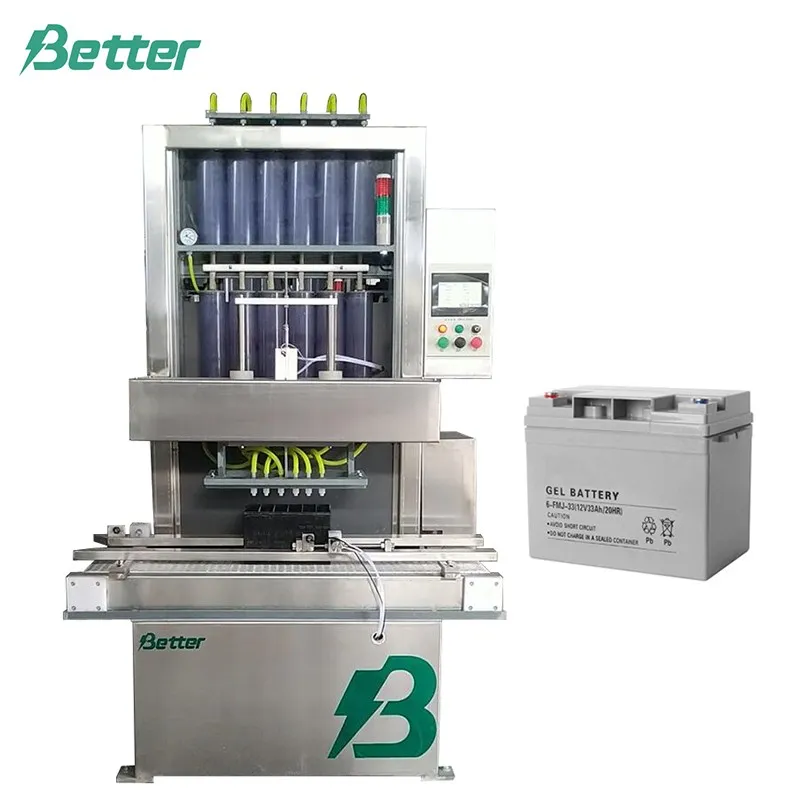
For manufacturers producing high-quality gel batteries, precise gel filling is essential to achieve consistent performance and long service life. A reliable gel filling machine ensures uniform distribution of the gel electrolyte, minimizes air pockets, and maintains exact dosing. The gel filling machine from Better-Tech offers automated vacuum filling, precise temperature control, and high throughput, helping factories reduce defects and improve efficiency. If you're scaling up gel battery production or upgrading your line, this equipment is worth considering for better product quality and lower production costs. Visit gel filling machine for detailed specifications and options.