Why Every Camper Needs a Portable Power Station
2026-07-01 11:16Table of Contents
What Size Battery Do You Actually Need
Output Power Matters Just as Much
Why Battery Chemistry Should Be on Your Radar
Charging Options Make or Break the Experience
Portability vs. Capacity: Finding the Sweet Spot
A Reliable Choice for Your Camping Setup
What Size Battery Do You Actually Need
This is the first question every camper asks, and it's the right one to start with. Battery capacity is measured in watt-hours (Wh), and that number tells you how much energy the power station can store. For a weekend camping trip with a phone, a few lights, and maybe a fan, a 300–500Wh unit might get you through. But once you add a portable fridge, a laptop for work, or a CPAP machine, you're looking at a different ballgame.
A 1000Wh capacity is widely considered the sweet spot for most campers. Why? Because it gives you enough juice to run a 12V camping fridge for roughly 17 hours on steady draw—or closer to 28 hours once you factor in the fridge's normal cycling. That means cold drinks and fresh food for an entire weekend without worrying about your battery dying halfway through. For context, a 1000Wh unit can charge a smartphone over 30 times or run a laptop for about 12 hours. If you're heading out for two or three nights with a fridge or medical device, 1000Wh is where you should be looking.
The key takeaway: don't guess your capacity needs. Make a quick list of what you'll bring, check each device's wattage, and add a buffer. It's better to have extra capacity than to run out of power on day two of a four-day trip.
Output Power Matters Just as Much
Capacity tells you how long you can run things. Output power tells you what you can run at all. Output is measured in watts (W), and this is where a lot of campers get tripped up. Some devices—especially those with motors or compressors—need a surge of power to start up, sometimes two or three times their running wattage.
For camping, a continuous output of 1000–1500W covers the vast majority of loads you'll encounter. That range will run a mini-fridge, a coffee maker, a small induction cooktop, or a CPAP machine without breaking a sweat. Anything lower and you might find yourself unable to power that one device you really counted on.
Also worth checking: whether the unit has a pure sine wave inverter. This matters because sensitive electronics—laptops, cameras, drones—perform better and last longer with clean, stable power. Cheap inverters can produce "dirty" power that causes issues over time. If you're powering anything with a circuit board, pure sine wave isn't optional—it's essential.
Why Battery Chemistry Should Be on Your Radar
Not all batteries are created equal, and the chemistry inside your power station makes a bigger difference than most people realize. Today's portable power stations mainly use two types: standard lithium-ion (often called NMC) and lithium iron phosphate (LiFePO4).
Here's the short version. LiFePO4 batteries offer significantly longer lifespans—typically 3000 to 5000 cycles compared to 500–800 cycles for standard lithium-ion. That means if you camp regularly, a LiFePO4 unit could last you a decade or more, while an NMC unit might start losing meaningful capacity after a couple of years. LiFePO4 also has better thermal stability, meaning it's much less likely to overheat or experience thermal runaway under stress. This matters when you're charging overnight in a tent or leaving the unit in a hot car.
The trade-off? LiFePO4 is slightly heavier for the same capacity. But for car camping, where weight isn't the primary concern, the longevity and safety advantages make it the clear winner for most campers. This is why more and more modern power stations are shifting toward this chemistry.
Charging Options Make or Break the Experience
A power station is only as useful as your ability to recharge it. This is especially true on longer camping trips where you're off-grid for multiple days. Look for units that support multiple charging methods: AC wall charging, car charging, and solar input.
Solar compatibility is particularly valuable for camping. If your power station supports solar panels with an MPPT controller, you can keep topping up your battery throughout the day under the open sky. This turns a finite power supply into something much more sustainable. Even a 100W panel can make a real difference over a long weekend.
Fast AC charging is another feature worth paying attention to. Some units can recharge from empty to 80% in under two hours via a wall outlet. That's incredibly convenient if you're stopping at a café or campsite with hookups between legs of your trip. The more flexible your charging options, the less you'll worry about running out of power.
Portability vs. Capacity: Finding the Sweet Spot
There's always a trade-off between how much power a station holds and how easy it is to carry. A 2000Wh unit is great for extended off-grid living, but hauling it to a tent pad is a workout. On the other hand, a tiny 300Wh unit is easy to carry but won't get you through a weekend with a fridge.
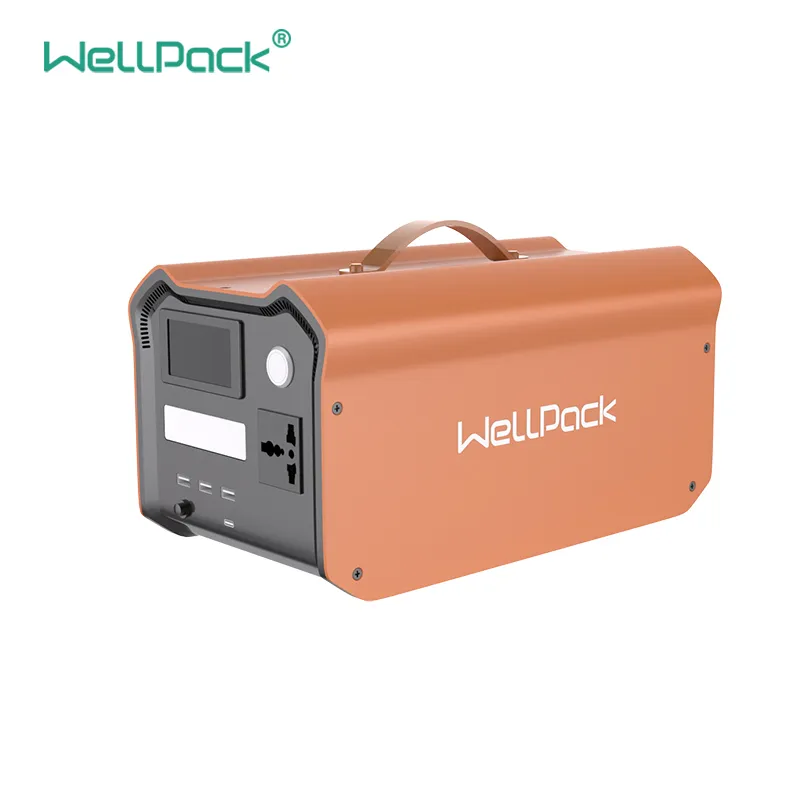
For most campers, the sweet spot sits around the 1000Wh mark with a weight under 10kg. That's enough capacity for real utility without turning your campsite setup into a heavy-lifting exercise. Look for units with built-in handles and a compact form factor—something that fits easily in the trunk and doesn't take up half your cargo space. A well-designed unit around 335×190×185mm hits that balance nicely.
Remember: the best power station is the one you'll actually bring with you. If it's too heavy or awkward to pack, it stays home, and then it's useless. Find the balance that works for your style of camping.
A Reliable Choice for Your Camping Setup
If you're looking for a power station that checks all these boxes, the 1000Wh Top Portable Power Station from Better Tech (WELLPACK brand) is worth a serious look. It delivers a continuous 2200W output with the same peak power—enough to run demanding gear like computers, drones, or even small appliances without a hitch. The 1000Wh capacity handles a weekend camping fridge, multiple device charges, and then some. At just 8.2kg with compact dimensions of 335×190×185mm, it's genuinely portable without sacrificing performance. The unit supports fast AC input at 1200W for quick recharges and is compatible with portable solar panels for off-grid charging. Multiple output ports with pure sine wave technology protect your sensitive electronics from power surges. And with ISO 9001 certification backing its build quality, you're getting a unit designed to last. Whether you're heading out for a weekend getaway or need reliable backup power for work in remote locations, this portable power station delivers the performance and dependability that campers actually need. Check it out at product page to see if it fits your setup.