What Is a Cast on Strap Machine in Battery Making
2025-12-30 15:08Contents
1. Basics of Cast on Strap in Battery Assembly
2. Role in Lead-Acid Batteries
3. How the Machine Works
4. Common Challenges Without Proper Equipment
5. Benefits of Using a Dedicated Machine
6. Key Features to Look For
7. Choosing the Right Cast on Strap Machine
Basics of Cast on Strap in Battery Assembly
In lead-acid battery production, connecting the plates inside each cell is a crucial step. The cast on strap process involves melting lead and pouring it over the lugs—those protruding tabs on the plates—to form solid straps that link all positive plates together and all negative ones separately. This creates reliable electrical paths and holds everything structurally sound. Without strong connections here, the battery simply won't perform well or last long.
Role in Lead-Acid Batteries
Lead-acid batteries, still widely used in vehicles, backup power systems, and industrial applications, rely heavily on this connection stage. The straps not only carry current between plates but also link cells through posts and bridges. A well-executed cast on strap ensures low internal resistance, which means better charging efficiency and longer cycle life. Poor connections, on the other hand, lead to higher heat buildup and premature failure.
How the Machine Works
A cast on strap machine automates the entire process for consistency. It starts by aligning plate groups precisely, often brushing the lugs to remove oxides for better fusion. Then, the lugs are dipped into a molten lead pot at controlled temperatures. The machine pours or casts the lead into molds around the lugs, cooling it quickly to solidify the straps. Modern machines use PLC controls to monitor every parameter, from melt temperature to cooling rate, ensuring the lead bonds fully without voids or cracks.
Common Challenges Without Proper Equipment
Doing this manually or with outdated tools often results in inconsistent joints. Temperature fluctuations can cause incomplete fusion, where the strap doesn't fully bond to the lugs, creating weak spots that corrode over time. Voids inside the strap trap air or impurities, raising resistance and risking early breakdowns. Cooling too fast or slow leads to cracks, while oxide buildup on lugs prevents good wetting by molten lead. These issues show up as reduced capacity, overheating during use, or complete failure in the field.
Benefits of Using a Dedicated Machine
Switching to a proper cast on strap machine brings clear improvements in production. Automation reduces human error, delivering uniform straps every time and cutting down on rejects. Precise temperature control minimizes defects like porosity or lack of fusion. Overall, you get higher output with less lead waste, lower energy use, and batteries that meet stricter quality standards. For smaller operations, these machines make scaling up feasible without needing a huge workforce.
Key Features to Look For
When evaluating a cast on strap machine, focus on practical aspects that affect daily running. Temperature-controlled demolding ensures the battery only releases when ready, preventing damage to fresh welds. Intelligent PLC interfaces make monitoring straightforward, showing real-time parameters without complexity. Sealed designs keep the workspace cleaner and safer, while compact sizes fit limited floor space. Fast cycle times—around 40 to 80 seconds per mold—help maintain steady production flows.
Choosing the Right Cast on Strap Machine
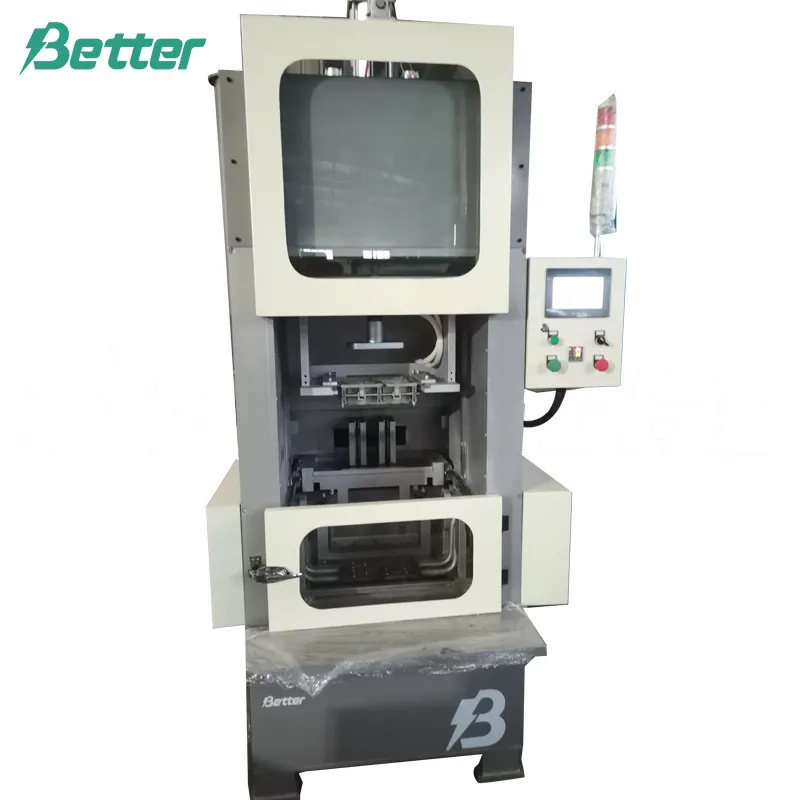
For small-scale lead-acid battery manufacturing, the needs differ from large automotive lines. Look for machines that handle 2 to 3 batteries per mold efficiently, with output reaching 600 to 800 units in an 8-hour shift. Ease of operation matters—no need for highly specialized staff. Reliable temperature management and sealed construction stand out for consistent quality and environmental compliance. One solid option is the Cast on Strap Machine from Better Technology Group. It uses precise temperature control for casting, only releasing batteries when demolding temperature is optimal, ensuring strong welds every time. The advanced PLC interface displays all parameters clearly, making adjustments simple. With a fully sealed build, compact footprint, and welding speeds of 40-80 seconds per mold, it runs reliably while keeping things safe and clean. This machine suits small battery production perfectly, boosting efficiency and quality without overcomplicating operations.