How Spot Welding Is Used in Battery Production
2026-03-19 15:00Table of Contents
1. What Spot Welding Means for Battery Makers
2. How Spot Welding Joins Battery Components
3. Factors That Shape Weld Strength in Lithium Packs
4. Trouble Spots You Run Into with Battery Spot Welding
5. Setting Up Parameters for Reliable Connections
6. Keeping Your Spot Welder in Top Shape
7. Why Automation Matters in Modern Battery Lines
What Spot Welding Means for Battery Makers
Spot welding sits at the heart of lithium battery production because it creates clean, strong connections between cells and the metal tabs or busbars that carry current. Unlike soldering or mechanical fasteners, spot welding uses quick bursts of electricity to fuse metals right at the contact point, so you avoid spreading extra heat across the whole cell. This matters a lot when you work with thin nickel strips or aluminum tabs that measure just 0.01 to 0.15 mm thick. In daily production, teams often search for ways to keep internal resistance low while protecting the delicate chemistry inside each lithium cell. Spot welding delivers that balance. It forms tiny nuggets of fused metal in milliseconds, giving you reliable conductivity without risking leaks or swelling later on. If resistance climbs even a little, batteries run hotter in use, lose capacity faster, and sometimes fail safety tests. That is why most lines rely on spot welding for everything from phone battery cores to larger EV modules. The process scales well, stays repeatable, and fits the tight tolerances modern packs demand.
How Spot Welding Joins Battery Components
The mechanics stay simple yet precise. Two copper electrodes press against the nickel tab and the cell terminal from opposite sides or sometimes the same side with projection designs. When the machine fires a controlled pulse of current, resistance spikes exactly at the interface because the contact area is small. That resistance turns electrical energy into heat, melting a small zone of both metals into one solid bond. The whole cycle lasts less than a second, so the heat stays localized and does not cook the electrolyte inside the lithium cell. In battery production, operators align the tab first, set the pressure, then trigger the weld. Good alignment keeps the nugget centered; any shift raises resistance or creates weak spots. Spot welding works especially well on steel or nickel-plated surfaces common in cylindrical and prismatic cells. For pouch cells or aluminum cases, teams adjust electrode shape and current to handle the different conductivity. The result is a joint that handles vibration, thermal cycling, and high discharge currents without loosening over time.
Factors That Shape Weld Strength in Lithium Packs
Three main controls decide whether a weld holds up or fails in the field: welding current, welding time, and electrode pressure. Raise the current too far and you burn through the thin tab or puncture the cell can. Drop it too low and the bond stays surface-only, giving high resistance that shows up as heat during discharge. Time works the same way—longer pulses add heat but risk damaging the cell if the material is very thin. Pressure squeezes the parts together; too little leaves gaps, too much crushes the tab and creates deep indentations that weaken the structure. Cleanliness counts just as much. Oxide layers, dust, or oil on the nickel strip or cell surface block proper fusion and force you to crank up the current to compensate. Electrode condition plays a big role too. Worn or pitted tips change the contact area and scatter the heat unevenly. In production, teams track these factors daily because even small drifts across a batch can turn a solid pack into one that overheats or loses capacity early.
Trouble Spots You Run Into with Battery Spot Welding
Most headaches in spot welding lithium batteries trace back to inconsistent parameters or dirty surfaces. Welds that look fine but pull apart under light tension usually come from low current or short pulse time. On the other end, burned-through spots appear when current runs high while pressure pushes the electrodes too deep into soft aluminum or thin nickel. Indentations that go deeper than 20 percent of material thickness often crack later under vibration. High contact resistance after welding shows up in pack testing as uneven cell balancing and faster self-discharge. Another frequent issue is electrode sticking—molten metal grabs the copper tip and tears the tab on the next cycle. In high-volume lines, these problems multiply fast because one bad weld in a module can force the whole pack to scrap. Operators also watch for misalignment on the negative terminal, where the internal connection sits close to the center; welding directly there risks damaging the cell’s safety vent or separator. Spot welding in battery production therefore demands constant attention to these details to keep yield high and avoid costly rework.
Setting Up Parameters for Reliable Connections
Start with the material specs in front of you. Measure tab thickness and cell terminal coating, then pull the manufacturer’s baseline chart for that combination. Most machines let you dial current in amps, time in cycles or milliseconds, and pressure in kg or psi. Run a short test series on scrap parts, checking each weld by peeling the tab—if the nickel tears before the weld breaks, you have a solid nugget. Visual inspection helps too: a good spot shows a smooth, slightly raised circle without cracks or heavy discoloration. Adjust one variable at a time. Increase current by 5 percent if adhesion feels weak; shorten time if the tab discolors too much. Keep electrodes clean between batches with a soft stone or dedicated dresser to restore the tip profile. For automated lines, store successful recipes in the controller so every shift starts from the same proven settings. When you move to a new nickel alloy or thicker busbar, repeat the test run rather than guessing. These steps cut down on scrap and give you spot welding results you can trust across thousands of cells.
Keeping Your Spot Welder in Top Shape
Regular maintenance keeps spot welding consistent day after day. Inspect electrodes every shift for pitting or mushrooming and dress them before the contact face grows wider than the target nugget size. Replace tips on schedule—worn electrodes force higher current and create uneven heat. Clean the machine’s contact surfaces and check pneumatic lines for leaks that drop pressure mid-cycle. Calibrate the current output quarterly with a weld checker to catch drift before it affects production. Lubricate moving parts lightly and keep the workspace free of metal dust that can short circuits or contaminate welds. When you run high-volume lithium battery lines, log every parameter change and weld pull-test result. That history helps you spot trends early, like electrodes needing more frequent dressing after switching to a harder nickel grade. A well-maintained machine wastes less energy, runs quieter, and delivers the same strong bonds shift after shift.
Why Automation Matters in Modern Battery Lines
Manual spot welding works for prototypes or low volumes, but production speed and repeatability push most battery makers toward automatic equipment. Robotic arms or multi-station machines handle feeding, alignment, welding, and inspection in one continuous flow. They hit rates of thousands of cells per hour while holding positioning accuracy within fractions of a millimeter. Human operators tire and vary pressure slightly from weld to weld; automation locks those variables down. Built-in cameras or sensors catch bad spots instantly and flag them before the next step. Touchscreen interfaces let supervisors load saved recipes and monitor every station remotely. Noise stays low, power draw stays efficient, and the whole setup scales when demand grows. For lithium battery production, automation turns spot welding from a bottleneck into a steady, reliable link in the chain. It reduces labor costs, lifts first-pass yield, and gives you the consistency needed to meet tight safety and performance specs on every pack that leaves the line.
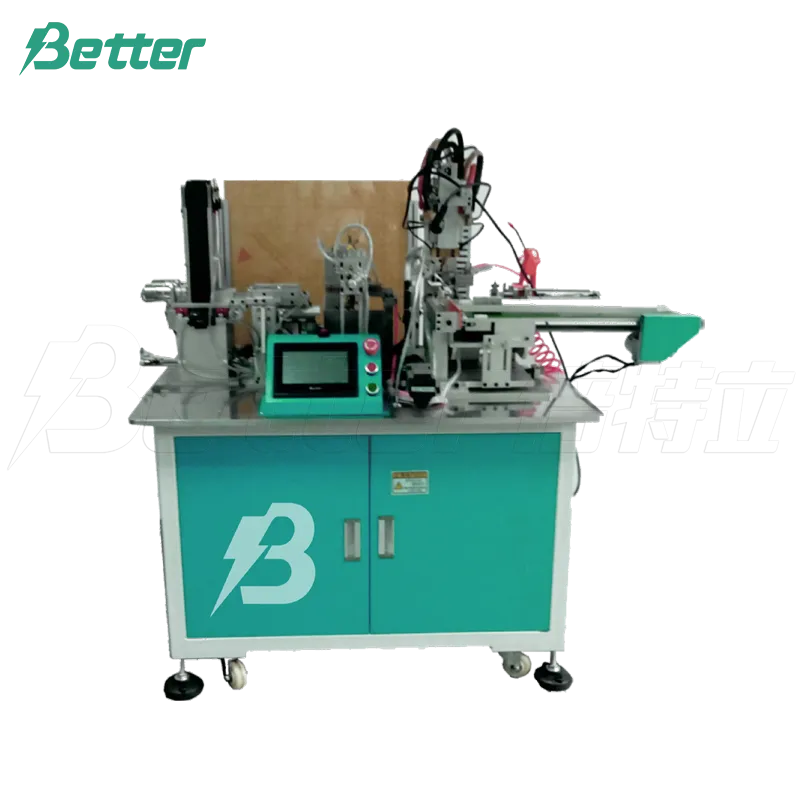
If you want to move your lithium battery production to the next level, the Lithium Core Automatic Spot Welding Machine delivers exactly the advantages busy lines need. It runs fully automatic with multiple manipulators and independent stations that keep output steady at 1500-1800 pieces per hour. Moving precision reaches 0.01 mm, so every nickel plate lines up perfectly on the cell core. The PLC touchscreen shows real-time status, stores parameter recipes, and gives clear fault alerts that even new operators can follow quickly. Low power use and noise under 50 dB make it comfortable for full shifts, while the stable design cuts manual handling and the inconsistencies that come with it. Whether you build phone battery packs or scale to larger modules, this machine solves the common headaches of speed, repeatability, and labor while keeping weld quality high.