Table of Contents
1. Why Testing Matters Before Shipment
2. The UN38.3 Requirement – What It Is and Why It’s Mandatory
3. The Eight Tests You Need to Know
Why Testing Matters Before Shipment
If you're involved in shipping lithium batteries – whether you manufacture them, integrate them into products, or distribute them – you've probably heard about testing requirements. But what actually needs to be done before your batteries can leave the warehouse? The short answer is UN38.3 testing is mandatory for all lithium battery shipments by air, sea, rail, or road. Without it, carriers will refuse your shipment, and you risk delays, fines, or worse.
Lithium batteries are classified as dangerous goods because of their energy density. Under certain conditions – pressure changes, temperature extremes, physical impacts, or electrical faults – they can leak, catch fire, or even explode. Testing before shipment isn't just red tape; it's about making sure your batteries can survive the real-world stresses of transportation without becoming a hazard.
The UN38.3 Requirement – What It Is and Why It's Mandatory
UN38.3 is a section of the United Nations Manual of Tests and Criteria – specifically, Part III, subsection 38.3. It lays out the testing protocols that lithium batteries must pass before they can be transported internationally. This standard is adopted by IATA for air transport, the IMDG Code for sea transport, and ADR for European road transport. In plain language: if you're shipping lithium batteries across any border or by any major mode of transport, UN38.3 applies to you.
One important distinction: UN38.3 is about transportation safety, not product quality or performance. Passing UN38.3 doesn't mean your battery is a good battery – it means your battery is safe to ship. That's why you'll often see UN38.3 testing done alongside other standards like IEC 62133 or UL 1642, which focus on electrical safety and performance.
The Eight Tests You Need to Know
UN38.3 requires eight specific tests, performed in a defined sequence. Here's what each one simulates and what it checks:
Altitude simulation – Batteries are placed in a low-pressure chamber at ≤11.6 kPa for six hours. This mimics the cabin pressure drop during air transport, checking whether seals hold and the battery structure remains intact.
Thermal test – Batteries undergo rapid temperature cycling between -40°C and +72°C, with ten cycles over several days. This tests seal integrity and internal connections under extreme temperature changes.
Vibration test – A swept-frequency sine vibration from 7Hz to 200Hz is applied in three perpendicular directions. This simulates the continuous vibration of road, sea, and air transport.
Shock test – Batteries receive 150g acceleration with 6ms half-sine shocks, 18 times total across different orientations. This replicates the impacts of handling and accidental drops.
External short circuit test – At 55°C, the battery terminals are shorted with external resistance below 0.1Ω. This simulates what happens if terminals accidentally touch during transport.
Impact/crush test – For cylindrical cells over 20mm diameter, a 9.1kg weight drops from 61cm onto the cell. For prismatic, pouch, and smaller cells, a 13kN crushing force is applied. This checks mechanical robustness.
Overcharge test – Batteries are charged at twice the maximum continuous current and twice the maximum voltage for 24 hours. This simulates a charger failure scenario.
Forced discharge test – Batteries are connected to a 12V DC power supply and forced to discharge at the maximum rated current. This simulates reverse charging from other cells in a battery pack.
If you're shipping batteries that are not installed in equipment, you'll also need a 1.2-meter drop test. And if your packaging contains more than 24 cells or 12 batteries, the drop test becomes mandatory as well.
What Counts as Passing
Each test has clear pass/fail criteria. For the first four tests (altitude, thermal, vibration, shock), the battery must show no leakage, no venting, no disassembly, no rupture, no fire, and the open-circuit voltage must remain at least 90% of the pre-test value. For the short circuit and impact tests, the surface temperature must not exceed 170°C, and there must be no disassembly, rupture, or fire within six hours. For overcharge and forced discharge, no disassembly or fire within seven days.
These aren't arbitrary numbers – they're thresholds that indicate whether a battery can survive transport without becoming a safety risk.
Beyond UN38.3 – Other Tests to Consider
While UN38.3 gets you through customs and onto the carrier, it doesn't tell you much about how your battery actually performs. If you're serious about quality control, you'll want to run additional tests before shipment.
Electrical performance testing is the most common next step. Open-circuit voltage (OCV) measurement tells you the battery's current state and helps estimate state of charge. AC internal resistance (ACIR) and DC internal resistance (DCIR) testing reveal the battery's health and can catch early signs of degradation. Many manufacturers run 100% inspection on OCV and ACIR as a minimum before shipping.
Beyond that, insulation resistance testing and dielectric withstand (Hi-Pot) testing check for electrical safety issues that could lead to shorts or shocks. These are especially important for battery packs that will be used in consumer devices or vehicles.
The Test Summary – Your Shipping Passport
Since January 1, 2020, a formalized Test Summary has been required for all lithium batteries offered for transport. This document must include the manufacturer's name, battery model identification, a list of tests passed and the testing laboratory's details, the responsible person's name and signature, and the date of issue. Without this Test Summary, carriers and regulators will not accept your shipment.
The Test Summary isn't a one-and-done document either. If you make significant changes to your battery design – materials, dimensions, or electrical characteristics – you may need to retest and update the summary. Keep this in mind as you iterate on your product.
Getting your batteries tested and certified before shipment is non-negotiable. But the process doesn't have to be complicated. With the right testing equipment and a clear understanding of what's required, you can move your products confidently, knowing they'll reach their destination safely.
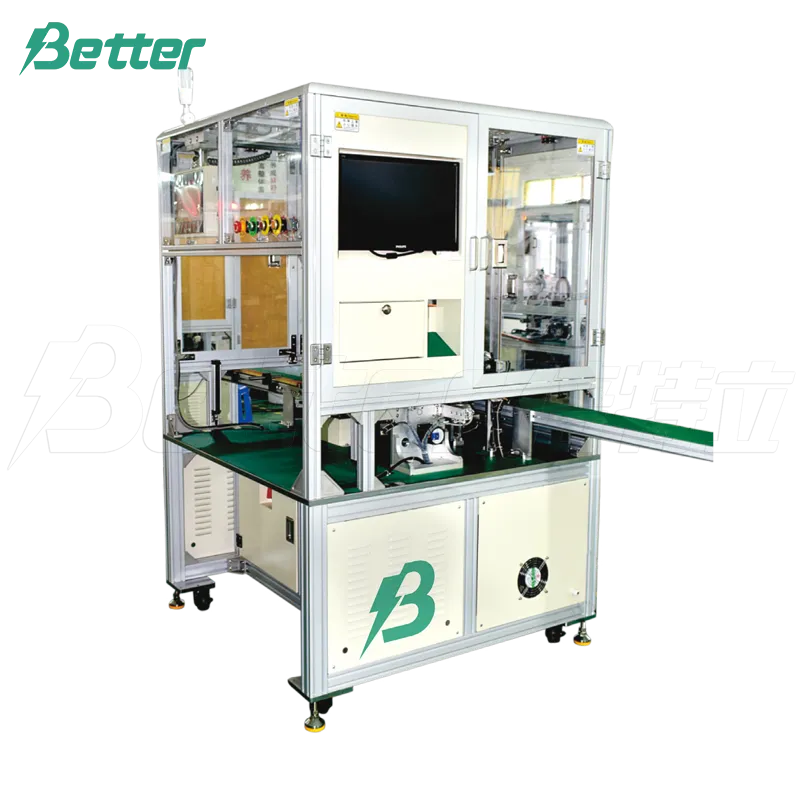
For manufacturers looking to streamline their battery testing process, the Performance Testing Machine from Better Tech offers a comprehensive solution. It performs multi-dimensional performance tests on batteries and PC boards – including resistance, voltage, short circuit, and discharge testing – with fully automated operation and high-precision sensors. The integrated data management system records every test result in real time and generates detailed reports, supporting full traceability for quality management. With a detection speed of 1,200 pieces per hour and adaptability to different battery sizes and types, it's built for production-scale quality control. If you're shipping batteries and need reliable, efficient testing to back up your UN38.3 compliance, this machine is worth a serious look.