Table of Contents
1. What Exactly Is a Commercial Battery Storage System
2. Why Your Business Should Bother With Battery Storage
3. How to Figure Out What Size System You Need
4. What It Actually Costs and How Long Until It Pays Off
5. The Safety Question Nobody Should Ignore
6. What Installation Really Looks Like
What Exactly Is a Commercial Battery Storage System
A commercial battery storage system — often called a BESS — is essentially a large-scale battery that sits on your business premises, stores electricity, and releases it when you need it. Unlike the small units you might see in someone's garage, these are designed for bigger loads, higher power demands, and more complex energy management. Most systems today use lithium iron phosphate (LiFePO4) battery cells because they're safer, last longer, and handle the daily charge-discharge cycles better than older battery chemistries.
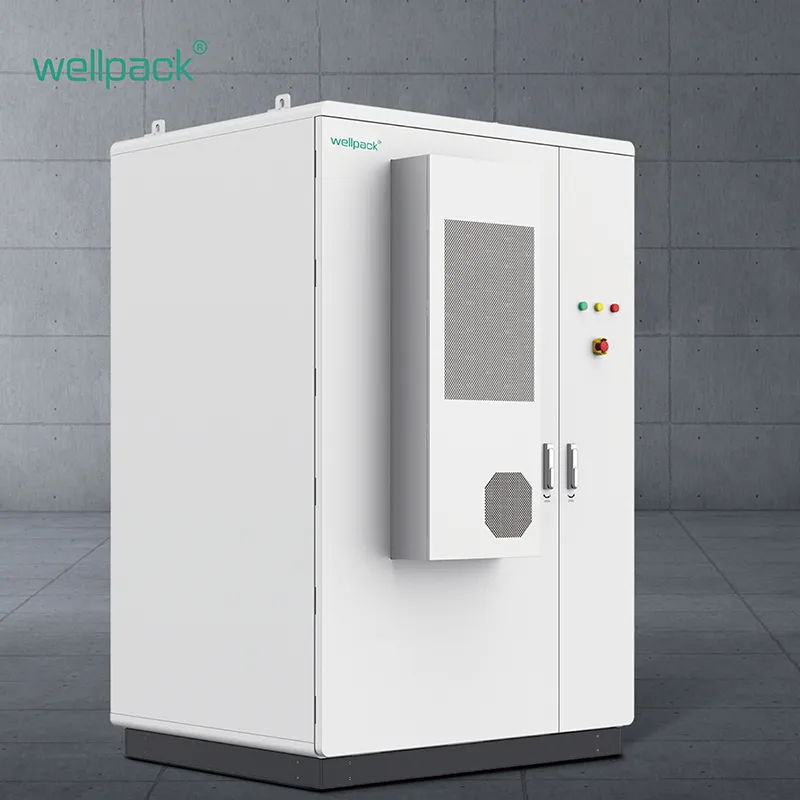
A typical commercial energy storage cabinet bundles everything into one enclosure: the battery packs, an inverter that handles AC/DC conversion, a cooling system, a battery management system (BMS), and a control unit. This all-in-one design means you're not piecing together components from different manufacturers — it's a complete package that connects to your building's electrical system with minimal custom engineering. The BMS monitors voltage, current, temperature, and state of charge at the cell level, while the energy management system (EMS) decides when to charge and discharge based on your usage patterns and electricity rates.
Why Your Business Should Bother With Battery Storage
The short answer is money and reliability. Most businesses install commercial battery storage for one or more of three reasons.
Peak shaving and demand charge reduction is the biggest driver for most commercial customers. Here's how it works: many commercial electricity tariffs don't just bill you for total consumption — they also charge based on your highest usage spike during the billing period, even if that spike only lasts fifteen minutes. These demand charges can range from $5 to $15 per kilowatt per month. A factory with a 500 kW peak demand could be paying $3,000 to $7,500 per month just in demand charges. A battery system discharges during those peak moments, smoothing out the spikes so your peak draw stays lower. Businesses typically see demand charges drop by 20% to 40% once a properly sized system is in place.
Backup power during outages is the second major reason. For manufacturing lines, cold storage, data rooms, and hospitals, even a short outage can mean lost product, corrupted data, or safety risks. A commercial battery system with backup capability switches over automatically, often within milliseconds, so critical equipment never sees an interruption. Unlike diesel generators, there's no fuel to store, no exhaust to manage, and no delay while the generator spins up. The battery is already charged and ready.
Renewable energy integration is the third piece. If your facility already has solar panels, pairing them with battery storage changes the math significantly. Solar peaks at midday, but many facilities use the most power in the early morning or evening. Without storage, any solar power you don't use immediately either gets exported at a low buyback rate or simply goes to waste. With storage, that excess gets stored and used later, meaning you consume more of what you generate.
How to Figure Out What Size System You Need
This is where a lot of people get it wrong. The right size depends on three things: your load profile, your peak demand, and what you're trying to achieve.
Start with your electricity bill. Look at your peak demand number — that's the highest kilowatt reading during any billing period. That tells you how much power the system needs to be able to deliver at any given moment. Then look at your total monthly consumption in kilowatt-hours — that gives you a sense of how much energy storage capacity you might need.
Think about what matters most to you. If you're primarily trying to cut demand charges, you need enough power capacity (kW) to cover your peak spikes, but you don't necessarily need hours of storage — fifteen minutes to an hour might be plenty. If you're looking for backup power, you need enough energy capacity (kWh) to keep your critical equipment running for however long an outage might last. If you're pairing with solar, you want enough storage to soak up the excess generation during sunny hours and use it later.
System sizes vary widely. Small commercial buildings might use systems around 50 kW / 100 kWh, while factories, logistics centers, and data centers may need several megawatts and several megawatt-hours. The good news is most commercial systems are modular — you can start with one cabinet and add more as your needs grow. Many systems support parallel connection of up to 10 or more units, so scalability is built into the design.
What It Actually Costs and How Long Until It Pays Off
Prices have come down dramatically. Stationary battery pack prices averaged around $70 per kWh in 2025, a 35% drop from 2020. At the system level, installed costs for commercial BESS in 2026 range from about $200 to $350 per kWh depending on the region and system configuration. Some analysts expect total installed costs to drop below $350 per kWh by late 2026.
But the purchase price isn't the whole story. You also need to factor in installation labor, electrical work, permitting, and ongoing maintenance. The true cost of a commercial battery system is never accurately reflected on the initial purchase order.
Payback periods vary, but the trend is improving. A commercial BESS earning from demand charge reduction, time-of-use arbitrage, and grid services simultaneously can generate three to four times the annual revenue from the same capital investment compared to a residential system. Payback periods of four to ten years are realistic for many commercial installations, with the shorter end of that range for facilities with high demand charges.
The Safety Question Nobody Should Ignore
Battery storage involves high-voltage electricity and a lot of stored energy. Safety isn't optional — it's the foundation of any credible system.
Look for systems with IP54 or higher ingress protection, which means the cabinet is protected against dust and water splashes. This matters for outdoor installations. Integrated fire suppression is non-negotiable — the system should have its own fire detection and extinguishing equipment built in. Smoke alarms, temperature alarms, and overvoltage protection should all be standard. The battery management system should provide cell-level monitoring and protection, including overcurrent, overvoltage, undervoltage, and overtemperature cutoffs.
If you're in a region with specific regulations, pay attention to them. New national standards in some countries have introduced stricter requirements for fire separation distances, battery prefabricated cabin layouts, and fire water supply. These aren't just bureaucratic hurdles — they exist because thermal runaway in lithium batteries is a real risk that needs to be designed for, not wished away.
What Installation Really Looks Like
Installation is simpler than you might think, but it's not a DIY project. A commercial battery storage cabinet arrives as a complete unit, typically on a truck. It gets placed on a concrete pad or other level surface outside your building. Electrical connections go to your main switchboard, and communication cables connect to your building's network so you can monitor the system remotely.
The installation needs to be done by licensed electrical contractors who understand the specific requirements for battery storage systems. Permitting can take time — local building departments and fire marshals often need to review the plans. Budget for this in your timeline. Once installed, most systems are relatively hands-off. The EMS handles charging and discharging automatically based on your settings and the electricity tariff. You can monitor performance through a cloud platform or local interface, but day-to-day operation doesn't require much attention.
One thing to consider upfront: where are you putting it? The cabinet needs clearance around it for ventilation and maintenance access. It needs to be on a surface that can handle the weight — a 215 kWh cabinet can weigh around 2,500 kg. And it needs to be somewhere that won't be in the way of deliveries, forklifts, or other daily operations.
If you're in the market for a commercial battery storage system that checks all the boxes, the 215kWh I&C Air Cooling Energy Storage Integrated Cabinet from Better Tech is worth a close look. It's an all-in-one unit that integrates LiFePO4 batteries, BMS, PCS, EMS, temperature control, and fire protection into a single cabinet. The system delivers 100 kW of power and 215 kWh of storage with a round-trip efficiency of 88%. It supports parallel expansion of up to 10 cabinets, reaching a maximum system capacity of 1,000 kW. The IP54 protection rating and integrated fire suppression make it suitable for outdoor installation, and the cabinet footprint is just 2 m². With a cycle life of over 8,000 cycles at 0.5C and 90% depth of discharge, it's built to last. For businesses looking for a practical, scalable, and safe commercial battery storage solution, this system delivers on the essentials without unnecessary complexity.