The Role of Epoxy in Battery Vibration Damping
2026-03-03 14:41Table of Contents
Why Batteries Face Serious Vibration Problems
Batteries in motion encounter constant shaking from everyday operation, whether in vehicles, tools, or equipment. These vibrations travel through the pack structure and create small but repeated movements between cells, terminals, and housings. Over time, such motion loosens connections, shifts electrode materials, and generates heat from friction inside the battery. Without protection, internal resistance rises, capacity drops faster, and the risk of shorts or mechanical fatigue increases significantly.
Many people working with battery systems notice these issues when performance declines unexpectedly after prolonged exposure to road bumps, machinery rumble, or handheld use. The problem gets worse at certain frequencies where resonance amplifies the force, turning minor shakes into damaging stress. Battery epoxy addresses exactly this by locking components in place and absorbing the energy before it causes harm. Understanding the risk helps you spot early signs like unusual noise during operation or gradual voltage instability, so you can act before full failure occurs.
Proper vibration control with battery epoxy prevents these hidden damages and extends service life in demanding environments. It is a practical step that directly tackles the mechanical stress batteries endure daily, making it essential knowledge for anyone involved in design, assembly, or maintenance.
What Is Battery Epoxy and Its Role in Damping
Battery epoxy is a two-part resin system designed specifically for encapsulation, potting, and sealing in battery assemblies. It cures into a durable solid that fills gaps, bonds parts, and creates a protective layer around sensitive cells and electronics. Unlike simple adhesives, battery epoxy for vibration damping combines strength with the ability to flex slightly under stress, which is key to its protective function.
In battery manufacturing and repair, this material serves as the first line of defense against mechanical wear. It surrounds individual cells, secures wiring, and seals terminals to stop movement that could otherwise lead to cracks or disconnections. The role of epoxy in battery vibration damping goes beyond holding things still — it actively converts vibrational energy into harmless heat through internal friction within the polymer chains. This energy dissipation keeps the entire pack stable even when external forces try to shake it apart.
Users searching for solutions to battery reliability often discover that battery epoxy provides additional benefits like moisture resistance and electrical insulation at the same time. It turns a vulnerable assembly into a solid, unified structure that handles real-world conditions far better than unsupported designs.
How Battery Epoxy Dampens Vibrations Effectively
When applied correctly, battery epoxy creates a continuous matrix that eliminates relative motion between components. The viscoelastic nature of the cured material allows it to deform slightly when hit by vibration waves and then return to shape while releasing the absorbed energy as low-level heat. This process stops resonance buildup and reduces the peak forces that reach the battery cells.
Epoxy for battery vibration damping works at both low and high frequencies. At low frequencies it provides structural rigidity to prevent large displacements, while at higher frequencies its internal damping properties break up wave transmission through the pack. The result is a noticeable drop in transmitted vibration amplitude, which protects welds, tabs, and delicate electronics from fatigue.
The damping effect also improves thermal management indirectly because stable components generate less excess heat from micro-movements. In practice, battery epoxy distributes stress evenly across the assembly instead of letting it concentrate at weak points. This uniform load sharing is why manufacturers rely on it for packs that must survive constant shaking without losing performance or safety margins.
Key Properties to Look for in Battery Epoxy
Effective battery epoxy must balance several technical characteristics to deliver reliable vibration damping. Adhesion strength to metals, plastics, and cell casings ensures nothing pulls apart under stress. Low shrinkage during cure — ideally less than 2% — prevents internal stresses that could crack the material later. Viscosity matters too; it needs to flow into tight spaces without trapping air while staying in place during application.
Flexibility is another critical factor. Battery epoxy should offer enough elongation to absorb shocks without becoming brittle, typically measured by Shore hardness in the range that suits your operating conditions. Chemical resistance to electrolytes and thermal stability across wide temperature swings keep the damping performance intact over years of service. Electrical insulation properties must remain high to avoid shorts even after long exposure to vibration.
Look for formulations with good pot life for working time and controlled cure speed so you can achieve void-free fills. These properties together determine how well the battery epoxy will perform in real damping situations, so checking datasheets for these details saves headaches down the line.
Choosing and Applying Battery Epoxy the Right Way
Selecting the right battery epoxy starts with matching the formulation to your specific vibration profile and operating environment. Consider the expected frequency range, temperature extremes, and required flexibility versus rigidity. Two-part systems allow precise tuning of the mix ratio for optimal cure and damping characteristics. Once chosen, proper surface preparation — cleaning and sometimes priming — ensures strong bonding that lasts.
Application demands accuracy. Mix components thoroughly to avoid weak spots, then dispense in a way that fills every gap without air pockets. Automated systems help achieve consistent thickness and coverage, which is vital for uniform vibration damping. Control ambient temperature and humidity during the process because they affect flow and cure time. After dispensing, allow sufficient curing before exposing the assembly to movement.
Pay attention to mixing ratio accuracy within ±3% because even small deviations can reduce damping performance or create soft spots. Layer thickness of 1 to 5 mm often provides the best balance of protection and weight. Following these steps turns battery epoxy into a dependable solution rather than a potential weak link in your vibration control strategy.
Troubleshooting and Maintaining Battery Epoxy in Use
Even with careful work, issues can appear when using battery epoxy for vibration damping. Air bubbles or voids weaken the matrix and create paths for vibration to concentrate damage. Uneven curing from temperature fluctuations leads to soft or brittle areas that fail sooner under stress. Poor adhesion shows up as delamination after repeated shaking cycles.
Fixes are straightforward once identified. Vacuum mixing or degassing removes trapped air before application. Maintaining a stable workspace at 20–25°C and moderate humidity prevents cure problems. If delamination occurs, check compatibility between the epoxy and substrate materials and consider primers. Regular inspection of sealed packs for cracks or separation helps catch issues early.
Maintenance involves keeping the cured battery epoxy clean and free from chemical contamination that could degrade its properties over time. In high-vibration setups, periodic vibration testing confirms the damping remains effective. With these practices, battery epoxy continues to protect against vibration long after initial application, delivering consistent performance without frequent rework.
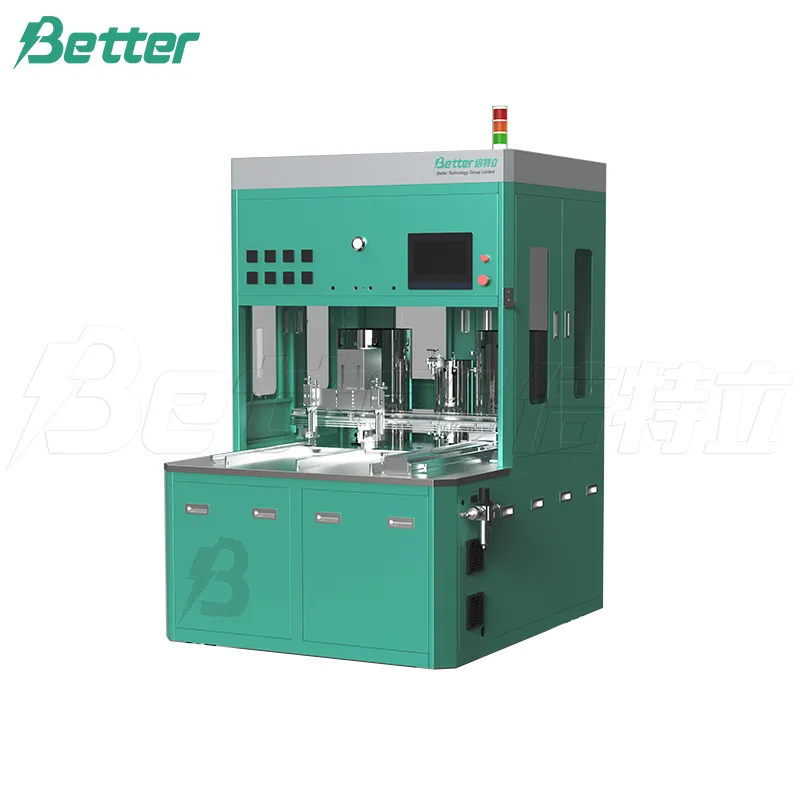
When scaling up production or seeking more consistent results with battery epoxy, consider specialized equipment that removes guesswork from the dispensing process. The Epoxy Dispensing Machine from Better-Tech automates precise AB epoxy application with dual stations, repeated positioning accuracy of ±0.02mm, and proportion accuracy within ±3%. Its anti-curing system dispenses small amounts automatically during pauses to prevent clogging, while the automatic cleaning cycle and vacuum mixing barrel keep operations smooth and reliable. Constant temperature control and over-pressure protection further ensure uniform, leak-proof results ideal for battery lid and terminal sealing — directly supporting superior vibration damping in finished packs. For manufacturers looking to boost efficiency, reduce waste, and achieve repeatable quality in battery epoxy application, this machine offers a practical upgrade worth evaluating for your line.