What Is an Acid Adding Machine and How Does It Work?
2026-07-08 14:10Table of Contents
1. What Is an Acid Adding Machine
2. How Does an Acid Adding Machine Work
3. What Types of Acid Adding Machines Exist
4. Why Battery Manufacturers Use Acid Adding Machines
5. What to Look for When Choosing an Acid Adding Machine
What Is an Acid Adding Machine
An acid adding machine is a piece of industrial equipment used in lead-acid battery manufacturing to inject sulfuric acid electrolyte into battery cells. After battery plates are assembled into the casing, the acid adding machine delivers a precise volume of diluted sulfuric acid into each cell before the formation process begins. This machine replaces manual acid pouring, which was traditionally done by workers relying on experience and often led to inconsistent results.
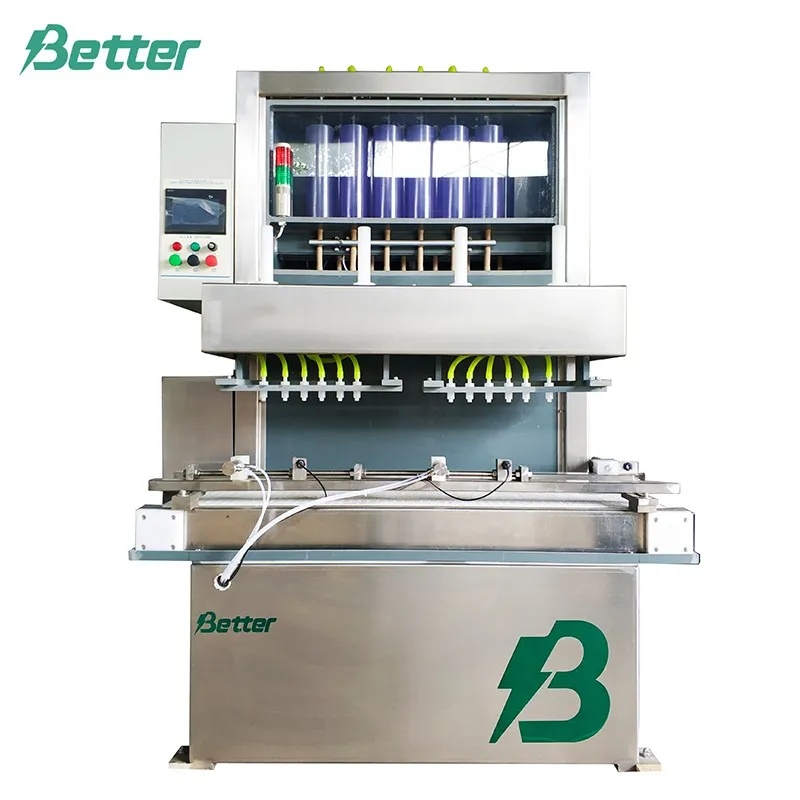
The acid adding machine typically consists of an acid storage tank, a metering or dosing system, filling nozzles, a conveyor mechanism, and a control unit. It is designed to handle the corrosive nature of sulfuric acid while maintaining accuracy and repeatability across large production volumes. Most modern acid adding machines use programmable logic controllers (PLC) to automate the entire filling sequence.
For battery manufacturers, the acid adding machine is a critical piece of production line equipment. The quality of the acid filling directly affects battery performance, capacity, and lifespan. Inaccurate acid addition can lead to capacity deficiencies, inconsistent charging behavior, and premature battery failure.
How Does an Acid Adding Machine Work
The operation of an acid adding machine follows a systematic sequence. Batteries are first conveyed into the machine and positioned beneath the filling nozzles. The machine then lowers the nozzles to align with the battery's acid inlet ports. Once positioned, the metering system delivers a preset volume of acid into each cell.
The metering mechanism is the core of the acid adding machine. Most machines use a quantitative dosing method — a measuring cylinder or similar device that precisely controls the amount of acid dispensed. The volume is typically preset via a touchscreen interface, and the machine automatically adjusts the dosage using digital control. Some advanced machines use rotary encoders and computer control to achieve filling accuracy within ±1% of full scale.
After filling, the machine may perform additional functions such as vacuum suction to remove excess acid or liquid level detection to verify that each cell has received the correct amount. The finished batteries are then automatically conveyed out of the machine, ready for the next stage of production.
Many acid adding machines also incorporate safety features. Since sulfuric acid is highly corrosive, the equipment uses acid-resistant materials such as 316L stainless steel for wetted parts. The filling process is enclosed to minimize acid mist and fumes, protecting both operators and the surrounding environment.
What Types of Acid Adding Machines Exist
Acid adding machines come in several configurations to suit different production needs. The main categories include semi-automatic and fully automatic machines.
Semi-automatic acid adding machines require some manual intervention, such as placing batteries onto the conveyor or initiating the filling cycle. These are suitable for smaller production volumes or facilities where budget constraints are a consideration. However, they still provide significant improvements over manual pouring in terms of accuracy and safety.
Fully automatic acid adding machines handle the entire process from battery loading to filling to unloading without operator intervention. These machines are designed for high-volume production lines and can process multiple batteries per minute. They feature automated conveying, positioning, filling, and output, with all parameters controlled through a central HMI (human-machine interface).
Some acid adding machines are designed for specific battery types or capacities. For instance, machines may be built to handle 12V batteries ranging from 32Ah to 200Ah. Others are more versatile and can accommodate different battery models by adjusting the guiding bar width and nozzle height.
There are also specialized machines that combine acid adding with other functions, such as vacuum formation or liquid level adjustment. These integrated systems can streamline production by reducing the number of separate processing steps.
Why Battery Manufacturers Use Acid Adding Machines
The shift from manual acid pouring to automated acid adding machines is driven by several compelling advantages.
Precision and consistency are perhaps the most important benefits. Manual acid addition is inherently variable — different workers may pour different amounts, and even the same worker may not be perfectly consistent from one battery to the next. An acid adding machine delivers the same volume every time, ensuring that each battery cell receives exactly the electrolyte it needs. This consistency translates directly to more uniform battery performance and higher product quality.
Safety is another critical factor. Sulfuric acid is dangerous to handle. Manual pouring exposes workers to spill risks, splashes, and acid fumes. Acid adding machines enclose the filling process and minimize human contact with the acid, significantly reducing workplace injuries and associated liability.
Efficiency and throughput improve dramatically with automation. A typical automatic acid adding machine can process 2 to 3 batteries per minute, far exceeding what manual methods can achieve. This allows manufacturers to scale production without proportionally increasing labor costs.
Waste reduction is another advantage. Inaccurate manual pouring often results in overfilling (wasting acid) or underfilling (requiring a second pass). Precise metering eliminates this waste, saving material costs and reducing environmental impact.
Finally, acid adding machines contribute to better battery quality and longer service life. Consistent acid levels mean each cell performs as designed, reducing the likelihood of premature failures and improving customer satisfaction.
What to Look for When Choosing an Acid Adding Machine
Selecting the right acid adding machine for your production line requires careful consideration of several factors.
Production capacity is the first consideration. Evaluate your current and projected output to determine the throughput you need. Machines vary widely in speed — some process just a few batteries per minute, while others can handle significantly higher volumes. Choose a machine that can meet your production targets without becoming a bottleneck.
Filling accuracy directly impacts battery quality. Look for machines with high precision metering systems. Accuracy within ±1% of full scale is a good benchmark for most applications. Machines with digital control and rotary encoder feedback tend to offer better precision than purely mechanical systems.
Battery compatibility matters if you produce multiple battery models. Check whether the machine can accommodate the range of battery sizes and types you manufacture. Features like adjustable guiding bars and variable nozzle height make it easier to switch between different models.
Material quality is essential for longevity and reliability. Acid is highly corrosive, so all wetted parts should be made from acid-resistant materials. 316L stainless steel is the industry standard for components that contact acid. Also check the quality of other components such as the PLC, encoders, and pneumatic parts — reputable brands like Mitsubishi, KOYO, and Schneider are generally more reliable.
Ease of operation and maintenance should not be overlooked. A user-friendly touchscreen interface simplifies setup and monitoring. Machines with straightforward adjustment mechanisms reduce changeover time when switching battery models. Consider also the availability of technical support and spare parts.
Space and utility requirements are practical considerations. Check the machine's dimensions and weight to ensure it fits your facility layout. Verify that your electrical supply (voltage and frequency) and compressed air capacity match the machine's specifications.
If you are in the market for a reliable acid adding machine, the Automatic Acid Adding Machine from Better-Tech (https://www.better-tech.net/product/acid-adding-machine) is worth serious consideration. Designed for 12V32Ah-200Ah batteries, this machine features a numerical control quantitative system with a rotary encoder for precise acid volume control. It offers a filling volume range of 200-2000ml per head with a filling speed of 1000ml/min per nozzle and achieves ±1% F.S filling accuracy. The machine handles two 12V batteries simultaneously with automatic conveying, positioning, and output, processing 2-3 batteries per minute. Built with 316L stainless steel, a PP conveyor belt, Mitsubishi PLC/HMI, KOYO rotary encoder, and AirTAC pneumatic components, it is engineered for durability and precision. For battery manufacturers seeking a dependable, high-precision acid adding solution, this machine delivers the performance and build quality that production lines require.