The Role of Epoxy Drying Process in Lead-Acid Battery Sealing Performance
2026-05-12 11:42Table of Contents
Why Battery Sealing Matters
The Epoxy Drying Process Explained
Common Sealing Problems and Solutions
How Proper Drying Improves Battery Life
Choosing the Right Drying Equipment
Product Recommendation
Why Battery Sealing Matters
If you've ever dealt with a lead-acid battery that failed prematurely, leaked acid, or lost capacity quickly, the root cause often traces back to one critical factor: the seal. The epoxy seal is what keeps the electrolyte inside and contaminants out. A weak or improperly cured seal leads to acid leakage, which is not just a messy cleanup problem. It causes corrosion on terminals and connectors, increases internal resistance, and ultimately results in a dead battery. For anyone relying on batteries for backup power, electric vehicles, or industrial equipment, understanding sealing is key to avoiding unexpected downtime and replacement costs.
The Epoxy Drying Process Explained
Epoxy drying isn't simply about letting glue air dry. It's a controlled thermal process that ensures the epoxy resin fully cross-links and forms a strong, durable bond. In lead-acid battery production, epoxy is applied to the lid and terminal areas. The drying oven then provides consistent heat to cure the epoxy. The goal is to achieve a uniform temperature throughout the curing chamber so every battery receives the same treatment. If the temperature fluctuates or has hot/cold spots, some epoxy may remain tacky or brittle, compromising the seal. A proper drying process maintains a precise temperature, typically between 40°C to 80°C, with minimal deviation to ensure complete and even curing.
Common Sealing Problems and Solutions
Many battery failures stem from common sealing issues. One is incomplete curing, where the epoxy doesn't harden fully because of low temperature or short dwell time. This leads to soft spots that can leak under pressure. Another is thermal stress cracking, which happens when the epoxy cools too quickly or is exposed to uneven heating. Bubbles or voids in the epoxy layer are also problematic, as they create pathways for acid vapor to escape. The solution lies in a drying system that offers precise temperature control, uniform heat distribution, and adjustable conveyor speed. By controlling these parameters, manufacturers can eliminate curing defects and produce batteries with reliable, long-lasting seals.
How Proper Drying Improves Battery Life
A well-sealed battery lasts longer and performs better. The epoxy seal prevents electrolyte loss, which maintains the proper acid concentration and plate saturation. This directly affects capacity and cycle life. It also blocks oxygen ingress, reducing self-discharge and minimizing grid corrosion. When the drying process is optimized, the epoxy forms a tight, chemically resistant barrier that withstands vibration, thermal cycling, and internal gas pressure. For end-users, this translates to batteries that hold charge longer, require less maintenance, and deliver consistent power over many years. Investing in a proper drying setup pays off through extended service life and reduced total cost of ownership.
Choosing the Right Drying Equipment
Selecting an epoxy drying oven involves several practical considerations. First, temperature uniformity is critical; look for ovens that guarantee a tight temperature spread, ideally within ±2°C. Second, energy efficiency matters for operating costs—systems with recirculating air design heat up faster and use less power. Third, safety features like over-temperature alarms and anti-fall mechanisms protect both the product and operators. Fourth, throughput should match your production volume; a typical shift can handle 4,000 to 10,000 pieces. Finally, ease of operation and maintenance reduces downtime and training overhead. The right equipment balances performance, reliability, and cost to ensure consistent sealing quality batch after batch.
Product Recommendation
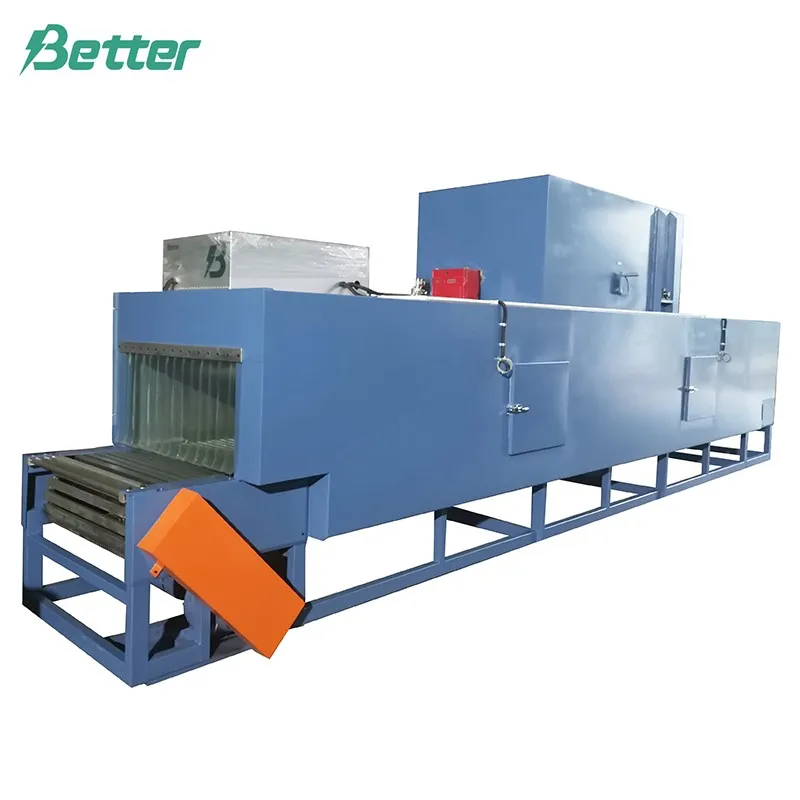
For manufacturers seeking a reliable solution, the High-Quality Automatic Lead Acid Battery Epoxy Drying Oven Machine from Better Technology Group offers several distinct advantages. It features a circulation air system that ensures high heat efficiency and fast temperature rise while keeping power consumption low. The temperature control precision is within ±2°C, providing uniform heating essential for consistent epoxy curing. With a daily production capacity of 4,000–10,000 pieces per shift and stepless speed adjustment from 80 to 200 mm/min, it adapts to various production rhythms. Safety is enhanced with over-temperature alarms and an anti-fall battery alarm. The oven is designed for easy operation and accommodates a wide range of battery sizes, from 12V 4.5Ah to 12V 200Ah UPS batteries and motorcycle batteries. For operations prioritizing sealing quality, throughput, and energy efficiency, this automatic drying oven is a recommended choice that can help elevate battery reliability and longevity.