How Unique Codes Ensure Battery Product Safety
2026-06-04 16:02Table of Contents
What Are These Codes on My Battery?
You've seen them: the small, often laser-etched strings of numbers and letters on the casing of your phone battery, laptop battery, or even the larger batteries for power tools and electric vehicles. They might look like a random jumble, but these unique identification codes are a critical part of modern battery technology and product safety. Think of them as a battery's fingerprint or a detailed serial number. This code is the key piece of information that connects a physical battery unit to its digital record in the manufacturer's database.
This practice is called battery marking or coding. The code itself can contain a wealth of information. At its simplest, it is a unique serial number. More advanced codes can be encrypted or formatted to include the manufacturing date, batch or lot number, factory of origin, and specific model specifications. The primary purpose is to establish a one-to-one link for traceability. In an industry where a single flaw can lead to significant safety incidents like fires, the ability to track a battery back to its exact production line, date, and component sources is not just useful—it's essential for quality control and rapid response to issues.
How Codes Keep You Safe: From Fakes to Overheating
So, how does a simple string of characters translate into real-world safety for you? The mechanism operates on multiple levels, addressing both deliberate malfeasance and unintentional manufacturing defects.
First, they are a frontline defense against counterfeit batteries. The market is flooded with fake batteries that look identical to brand-name products but use substandard, dangerous cells and lack proper protection circuits. These counterfeits are a major fire hazard. A genuine, scannable, and verifiable unique code makes it exponentially harder for counterfeiters to replicate a product fully. It allows you, the end-user, and retailers to verify a battery's authenticity through the manufacturer's website or a dedicated app. This is crucial for high-demand items like smartphone batteries, drone batteries, and laptop replacement cells.
Second, unique codes enable highly effective recall campaigns. If a manufacturer discovers a defect in a specific batch—perhaps a faulty cell from a particular supplier that could lead to thermal runaway—they can pinpoint the affected units using the batch information embedded in the codes. Instead of issuing a blanket recall for an entire model produced over six months, they can target the recall to batteries with codes falling within a specific range. This is faster, less wasteful, and far less confusing for consumers, who can quickly check their battery's code against the recall notice.
Third, this system aids in warranty validation and repair diagnostics. When a battery fails, a technician can input its unique code to pull up its full history: when it was made, where, and its intended specifications. This helps diagnose whether the failure was due to a manufacturing defect (covered by warranty) or external factors like physical damage or use with an incompatible charger (typically not covered). It brings clarity and fairness to the service process.
What You Can Do: A User's Guide to Battery Codes
As a user, you are not a passive recipient of this safety feature. You can actively use these codes to protect yourself, your devices, and your investment. Your first and most important habit should be to verify the authenticity of any replacement battery or high-capacity device battery (like for vapes or premium flashlights) before purchase. If a seller cannot or will not provide a valid, verifiable code, consider it a major red flag.
Upon purchasing a new device or battery, take a moment to register the product on the manufacturer's website using its unique code. This instantly activates your warranty and ensures you are in the system for any critical safety notifications or recalls. It's a simple step that most people skip, but it is a direct link to the manufacturer for support.
Learn to check the code periodically. For built-in batteries, you can often find the code in the device's system settings (e.g., "About Phone" section for smartphones). For removable batteries, the code is physically marked on the cell. Knowing how to locate it saves time if you ever need to check for recalls or contact support. Furthermore, be mindful of the manufacturing date, which is often part of or decipherable from the code. Lithium-based batteries degrade over time, even when unused. A battery that left the factory more than two or three years ago will have a significantly reduced capacity and lifespan compared to a fresh one, regardless of its "new old stock" status.
Beyond Your Purchase: The Lifecycle of a Battery
The utility of the unique code extends far beyond your ownership. It plays a vital role in the battery's end-of-life phase, which is increasingly important for environmental and regulatory reasons. As the push for a circular economy grows, proper battery recycling is paramount. Different battery chemistries (like Lithium-ion, Lithium Iron Phosphate, Nickel-Metal Hydride) require different recycling processes.
When batteries are collected for recycling, these codes can be scanned to quickly identify their chemistry, model, and sometimes even the specific materials used inside. This allows recycling facilities to sort and process batteries more efficiently and safely, ensuring hazardous materials are contained and valuable ones like lithium, cobalt, and nickel are recovered effectively. In some regions, regulations are moving towards requiring such traceability to ensure producers are responsible for the entire lifecycle of their products. The code that helped ensure its safe birth and use now guides its safe and sustainable disposal.
The Professional Solution: Ensuring Every Code is Perfect
For battery manufacturers, applying these permanent, legible, and scannable codes is a non-negotiable part of the production process. The quality of the marking directly impacts the reliability of the entire traceability system. This is where professional-grade battery marking machines become critical infrastructure on the factory floor. A superior machine doesn't just print a code; it ensures the code is a dependable asset throughout the battery's life.
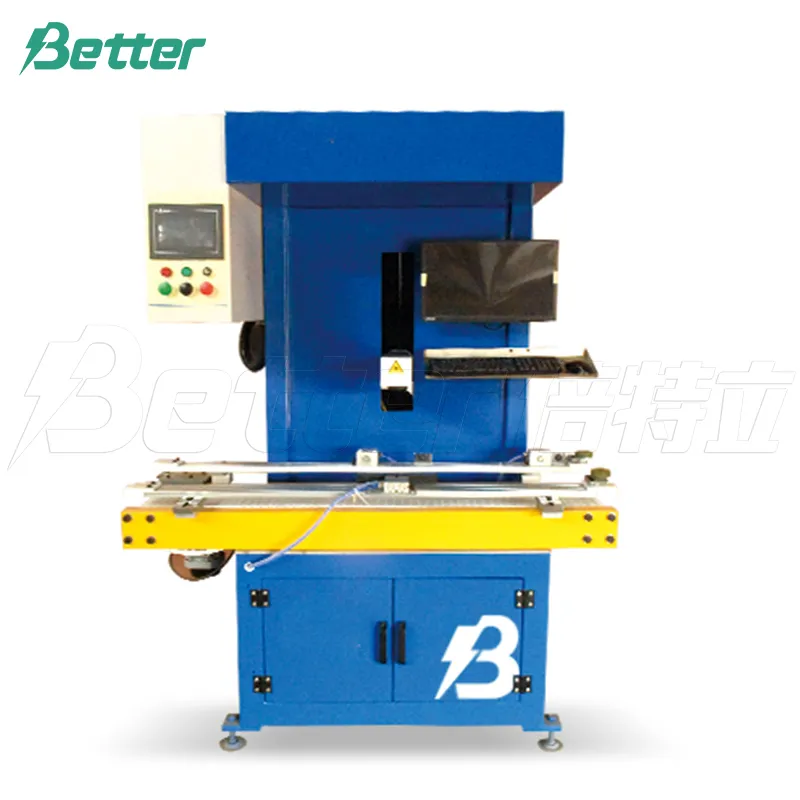
The automatic laser marking machine from Better Tech Group offers a robust solution tailored for this precise need. Its core advantage is creating a permanent, wear-resistant mark directly onto the battery casing without contact, which eliminates mechanical stress on the cell. The use of a laser ensures high-contrast, precise markings that remain readable even under harsh conditions, a necessity for long-term traceability. The system's high level of automation, driven by a Mitsubishi PLC and photoelectric sensors, guarantees consistent positioning and marking accuracy at high speeds, seamlessly integrating into a production line. Operators can easily pre-set and change serial numbers, dates, or alphabets via the user-friendly Human-Machine Interface (HMI), allowing for flexible coding schedules. Furthermore, the font and size of the mark can be adjusted via computer software, providing versatility for different battery sizes and information requirements. The sturdy A3 steel frame and reliable AirTAC pneumatic components ensure the machine can withstand continuous industrial operation. For any manufacturer prioritizing supply chain integrity, product safety, and regulatory compliance, investing in a reliable, automated marking system like this is not an option—it's a fundamental requirement to build trust and ensure safety from the production line to the end-user's hands.