How Inadequate Drying Causes Cracks in Battery Negative Plates
2026-05-08 14:55Table of Contents
1. What happens inside a wet plate during drying
2. Why cracks show up even when the surface looks dry
3. How moisture ruins strength and shortens battery life
4. What good drying looks like on the production line
5. Recommended equipment for reliable plate drying
What happens inside a wet plate during drying
After plate formation and plate washing, the negative plate holds a lot of water inside the active mass. As that water leaves, the plate shrinks. Shrinkage itself is not the problem. The problem starts when the shrinkage is not uniform. If the outside dries faster than the inside, the surface tries to contract while the core is still soft and expanded. That mismatch creates tension. Once the tension is higher than what the active material can hold together, the plate cracks. In many battery plants, this is the moment quality begins to drop, even if no one sees it yet.
This is why the drying stage is not just “removing water.” It is a stress-control stage. The way heat and airflow are applied decides whether the plate stays intact or develops tiny fractures that grow later. People often focus on temperature alone, but airflow balance, humidity slope, and how the plate is positioned matter just as much. A battery plate drying oven that cannot manage these factors will keep producing plates with hidden weaknesses.
Why cracks show up even when the surface looks dry
A plate can feel dry to the touch and still contain enough internal moisture to cause trouble. The outer layer dries, hardens, and locks in shape. The inner part keeps losing moisture and tries to shrink. Because the surface no longer moves, the inner shrinkage pulls against a fixed skin. That is a classic setup for cracking. These cracks are not always big. Some are small enough to miss during inspection, but they still break the continuity of the active mass and create weak spots that spread with cycling.
In negative plates especially, cracking is not only about drying speed. It is also about how evenly the section temperatures are controlled. If one zone is hotter than another, plates in that zone dry faster and become more brittle. When those plates meet normal handling or vibration in use, the damaged areas open further. For anyone searching “why do battery negative plates crack,” the honest answer usually points back to uneven drying conditions and poor moisture release control.
How moisture ruins strength and shortens battery life
Residual moisture does more than affect appearance. It changes how the plate behaves during assembly, charging, and long-term service. Plates that leave the drying process with uneven moisture tend to have uneven mechanical strength. Softer spots deform easier under pressure from stacking or clamping. Hard, over-dried spots become brittle and resist normal expansion during early cycles. This mix leads to localized stress that turns small defects into real failures.
From a performance point of view, inadequate drying often shows up later as lower consistency across batches, higher scrap during plate collection, and faster capacity fade in the finished battery. It also makes processes like curing and formation harder to stabilize because the starting condition of the plate is not uniform. When plants ask why quality drifts from batch to batch, the drying step is one of the first places to check.
What good drying looks like on the production line
Good drying does not mean “as hot as possible.” It means controlled. The temperature should be adjustable by section so the plate enters gently, loses moisture steadily, and finishes with uniform dryness. Air circulation needs to be strong enough to carry away vapor, but balanced so one side of the plate does not dry faster than the other. Waste exhaust also matters, because trapped humid air slows down the last bit of drying and creates gradients inside the oven.
Transmission style and plate collection method also affect outcome. Plates thicker than about 1.2 mm usually do better with vertical collecting, while thinner plates are often more stable with horizontal collecting. Small choices like these reduce handling damage and keep the dried plate flat and clean. When people look for a negative plate drying machine, they are really looking for a machine that can repeat these conditions hour after hour without constant tweaking.
Recommended equipment for reliable plate drying
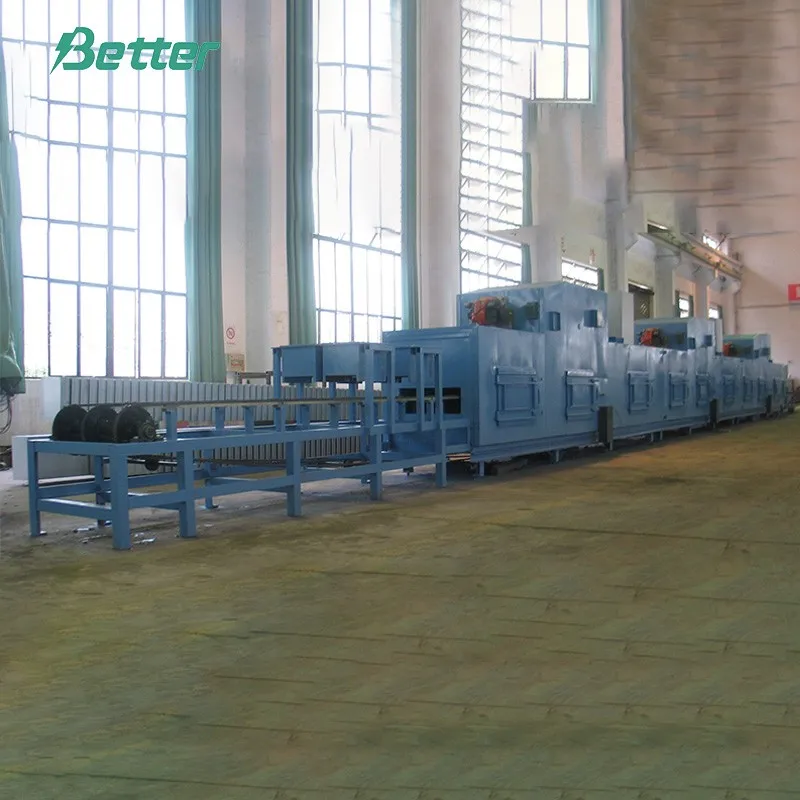
The Negative Plate Drying Machine from Better Technology Group Limited is built for exactly this job. It is used for drying negative or positive plates after plate formation and plate washing, with heating options for gas burning or electrical heating depending on the plant’s resources. The tunnel plate drying oven supports steady transmission through the drying section and allows individual temperature setting in each section within a practical range, which helps control shrinkage and reduce cracking. Plate collector types are available for vertical collecting and horizontal collecting to match plate thickness, and the transmission can be configured with tank chain or string roller chain, with the newer string roller chain transmission recommended for smoother operation.
From a production standpoint, the machine provides clear advantages: section-based temperature control, strong hot air circulation, dedicated waste exhaust, and a defined layout that includes front frame, drying box, and rear frame for plate handling. For plants that want fewer dried-plate defects, more stable plate strength, and a drying process that matches real battery manufacturing needs, this battery production equipment is a solid choice.