How Battery Leak Testing Ensures Safety and Performance
2026-06-02 10:17Table of Contents
What is Battery Leakage and Why Should You Care?
When you think of a battery failing, you might picture it simply going dead and losing power. However, a more serious, and sometimes hazardous, form of failure is battery leakage. Simply put, battery leakage occurs when the internal materials of a battery, such as electrolyte or gas, unintentionally escape from its sealed casing. This is not about a small household alkaline battery corroding in a remote control. In the context of the modern lithium-ion, lead-acid, or other advanced batteries that power everything from your smartphone to electric vehicles and backup power systems, a leak represents a critical breach of integrity. The casing of a battery is designed to be a robust, sealed container. When that seal fails, it can compromise everything from the device's performance to the user's personal safety. Understanding battery leakage is the first step in appreciating why rigorous manufacturing standards and testing are non-negotiable for the batteries you use every day.
Why Do Batteries Leak? The Invisible Threats
Batteries do not leak without reason. Several factors, often stemming from manufacturing flaws or extreme operating conditions, can lead to this problem. During charging and discharging, batteries generate heat and internal pressure. A well-designed battery is built to withstand these normal fluctuations. However, microscopic defects in the welding seams of the casing, imperfections in the sealing gaskets, or stress fractures from physical impacts can create a pathway for leakage. In lithium-ion batteries, the organic electrolyte is particularly sensitive. Overcharging, excessive heat, or internal short circuits can cause a rapid buildup of gas and pressure. If the battery's safety vents fail or the casing is compromised, this pressure will find the weakest point to escape, leading to leakage. Even without a catastrophic event, a tiny, persistent leak can develop over time from a poor initial seal. This is why the manufacturing process includes stringent quality control, where every single battery's seal integrity is verified. For you as a user, this translates to a simple rule: a battery that is leaking has a fundamental physical defect and should be considered potentially unsafe.
The Real-World Dangers of Leaking Batteries
The consequences of battery leakage extend far beyond a simple loss of power. The risks are multifaceted and directly impact safety, performance, and cost. The most immediate danger is a safety hazard. Leaking electrolyte is often flammable and corrosive. In a confined space like a laptop or an electric vehicle battery pack, escaping vapors can create a fire risk. Corrosive materials can damage the battery's internal components and the device it's powering, leading to irreversible damage. Secondly, performance plummets. A battery is an electrochemical system that requires a specific internal environment. A leak disrupts this balance, causing rapid self-discharge, a significant drop in capacity, and an inability to hold a charge. The battery that used to last a full day might die in a few hours. Finally, the financial and operational cost is high. A leaking battery within a large energy storage system or an electric vehicle can lead to the failure of the entire system, resulting in expensive repairs, downtime, and loss of trust in the brand. For everyday electronics, it can mean the destruction of a costly device. Ensuring a battery is leak-proof is a foundational requirement for its reliable and safe operation throughout its intended lifespan.
How Leak Testing Works: The Technology Behind Safety
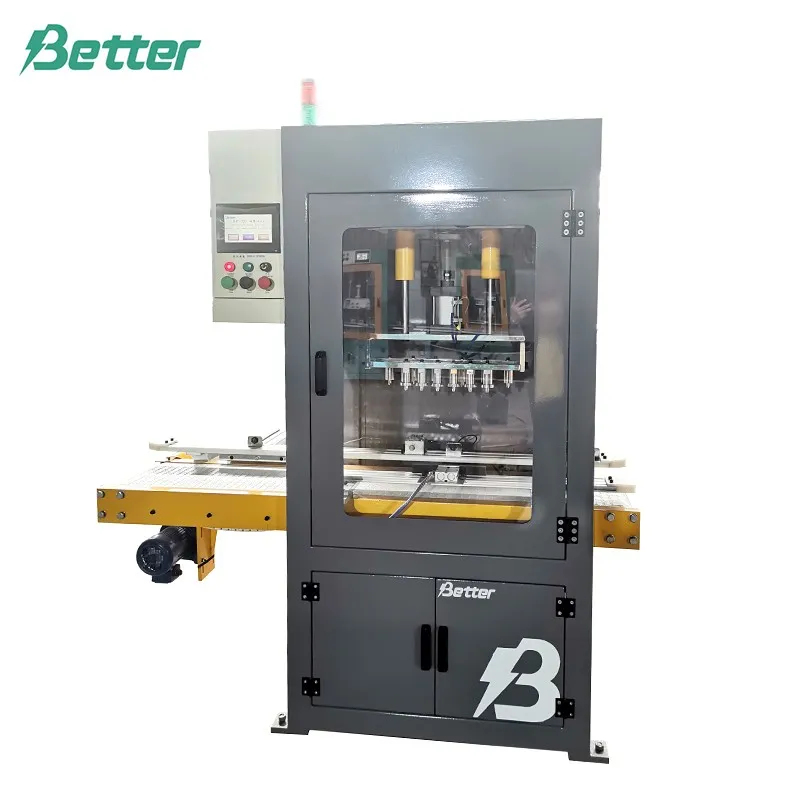
So, how do manufacturers ensure the batteries you buy are properly sealed? The answer lies in sophisticated, automated leak testing conducted on the production line. One of the most common and reliable methods is the air pressure decay test, which is precisely the technology described in the provided product page. Here’s how it works in principle: a test nozzle is sealed against the battery's vent or filler port. A precise amount of air is injected into the battery for a set period, pressurizing it. The system then monitors the internal pressure. If the battery casing is perfectly sealed, the pressure will remain stable. If there is even a minuscule leak, the pressure will drop. High-precision sensors detect this pressure change. The key performance metric here is testing precision. For instance, a high-quality machine can achieve a precision of 0.1% at 100Kpa, meaning it can detect extremely fine leaks that would be impossible to find manually. The testing pressure (0-100Kpa) and testing time (0-99s) are adjustable to simulate different real-world stress conditions or to test different battery models. Any battery that fails this test is automatically rejected. This process is fast, objective, and eliminates human error, providing a binary pass/fail result that guarantees every battery leaving the line has passed a basic integrity check.
How to Ensure You're Choosing Reliable Batteries
As an end-user, you can't perform an air pressure decay test on a battery you're about to purchase. However, you can make informed choices that steer you toward safer, more reliable products. Your first and most powerful tool is to buy from reputable brands and authorized retailers. Established brands invest heavily in the kind of automated quality control, including leak testing, described above. They have a reputation to uphold and are more likely to adhere to international safety standards. Secondly, look for relevant safety certifications on the battery or its packaging. Certifications like UL, CE, or specific standards from the International Electrotechnical Commission (IEC) indicate the product has undergone independent testing for safety, which includes seal integrity. Third, pay attention to the physical condition of the battery when you receive it. While rare, obvious signs of damage, swelling, or any residue around the seals are immediate red flags. Finally, use the battery and its charger as intended by the manufacturer. Avoid exposing batteries to extreme temperatures or physical shock, as these are the very conditions that can exacerbate a latent weakness and lead to leakage. Your vigilance, supported by the manufacturer's quality controls, forms the final layer of defense.
A Recommended Solution for Manufacturers
For battery manufacturers and pack assemblers, implementing a robust leak testing procedure is not optional. The Air Leakage Testing Machine from Better Tech Group exemplifies the specialized equipment required for this task. Its key advantages make it a strong candidate for production lines. First, it offers high testing accuracy and precision, crucial for catching even the smallest leaks that could become field failures. Second, it provides flexibility with adjustable testing time and pressure difference, allowing it to be calibrated for different battery types and testing standards. Third, its fully automatic operation—from positioning the battery via photoelectric sensor to segregating rejects—ensures consistent testing throughput of up to 100 units per hour without operator variability. Built with reliable core components like a Mitsubishi PLC and imported SMC sensors, it prioritizes long-term stability. For any facility producing batteries in the 32Ah-200Ah range, such as those for automotive applications, investing in a dedicated, automated leak tester like this is a direct investment in product safety, reduced warranty costs, and brand protection. It transforms leak testing from a theoretical quality goal into a measurable, repeatable, and assured step in the manufacturing process.