Why Intercell Welding is Critical for High-Capacity Car Batteries
2026-05-18 14:48Table of Contents
Introduction
Modern vehicles demand more power than ever before. From start-stop systems to advanced infotainment and onboard computers, the Battery is the silent workhorse keeping everything running smoothly. However, many drivers and even some technicians overlook a crucial manufacturing process that determines a Car Battery's reliability and lifespan: Intercell Welding. This internal connection process is far more critical than it appears. In this article, we will explore why perfect Intercell Welding matters, how it affects your vehicle's daily performance, and what modern manufacturers are doing to ensure every Battery delivers consistent, long-lasting power.
The Hidden Weakness in Your Car's Power Source
When a Car Battery fails, most people blame the alternator, extreme weather, or simply old age. While these are common culprits, the root cause often lies hidden beneath the casing. Inside almost every lead-acid or lithium Battery are multiple cells that must work in perfect harmony. These cells are joined together by internal welds. If these connections are weak, corroded, or poorly aligned, the entire unit suffers. Think of Intercell Welding as the foundation of a house; if the foundation cracks, the whole structure becomes unstable. Unlike external terminal corrosion, which is easy to spot, failed internal welds are invisible until the Battery completely dies, leaving you stranded at the worst possible moment.
How Intercell Welding Directly Impacts Battery Performance
The primary job of a Car Battery is to deliver a massive surge of current instantly to start the engine, and then provide steady power for all onboard electronics. Every time you turn the ignition key, the Battery experiences a tremendous amount of electrical and thermal stress. High-quality Intercell Welding ensures that the electrical resistance between cells remains incredibly low. When resistance is low, energy flows efficiently, and the Battery operates coolly. Conversely, poor welding creates "hotspots." These areas generate excessive heat during operation, which accelerates the breakdown of the internal chemical components. Over time, this thermal stress degrades the Battery's capacity, leading to sluggish engine cranks, dimming lights, and ultimately, total failure. For high-capacity applications, the margin for error in Intercell Welding is virtually zero.
Key Factors for Flawless Intercell Connections
Achieving a perfect internal weld is not just about melting two pieces of metal together; it requires extreme precision and control. The first critical factor is positioning. Even a millimeter of misalignment can weaken the structural integrity of the connection. The second factor is energy consistency. Voltage fluctuations in the power supply can cause welds to be too shallow or too deep, both of which are detrimental to the Battery's longevity. Finally, the speed of the welding process matters. The weld must be strong enough to withstand the mechanical vibrations of a running engine without cracking. Manufacturers focusing on high-quality Car Batteries invest heavily in automated systems that monitor and adjust these variables in real-time, ensuring that every single Intercell Welding point meets exact specifications.
Recognizing the Signs of Poor Welding Quality
Since the internal components of a Battery are sealed, you cannot visually inspect the Intercell Welding. However, your vehicle will give you subtle clues when these internal connections are failing. One of the earliest signs is a slow engine crank, especially on cold mornings. You might also notice that your headlights dim significantly when the air conditioner or heater is turned on, indicating that the Battery cannot handle the sudden power demand. Another red flag is frequent need for jump-starts, even after the alternator has been checked and confirmed to be working properly. Essentially, if your Car Battery seems to lose its charge quickly or struggles under normal loads, there is a high chance that the internal cell connections have degraded due to subpar welding or thermal fatigue.
The Solution: Upgrading to Precision Automatic Welding
For automotive manufacturers and Battery producers, the path to a superior product is clear: upgrading the production line with advanced, computer-controlled welding equipment. Relying on manual labor or outdated machinery introduces too much variability. Modern automatic welding machines eliminate human error by using photoelectric sensors to position the Battery perfectly before the welding heads even touch the surface. Furthermore, these intelligent systems continuously monitor the electrical current and automatically compensate for any voltage drops. By integrating such high-precision technology, factories can guarantee that every Car Battery leaving the assembly line has flawless internal connectivity, drastically reducing warranty claims and enhancing brand reputation.
Conclusion and Product Recommendation
In summary, Intercell Welding is the unsung hero of a high-performance Car Battery. It is the invisible bond that ensures your vehicle starts reliably every morning and your electronics function without a hitch. Cutting corners on this vital manufacturing step leads to premature Battery failure and frustrated customers. If you are in the business of manufacturing automotive batteries, investing in state-of-the-art welding technology is not just an option—it is a necessity for staying competitive.
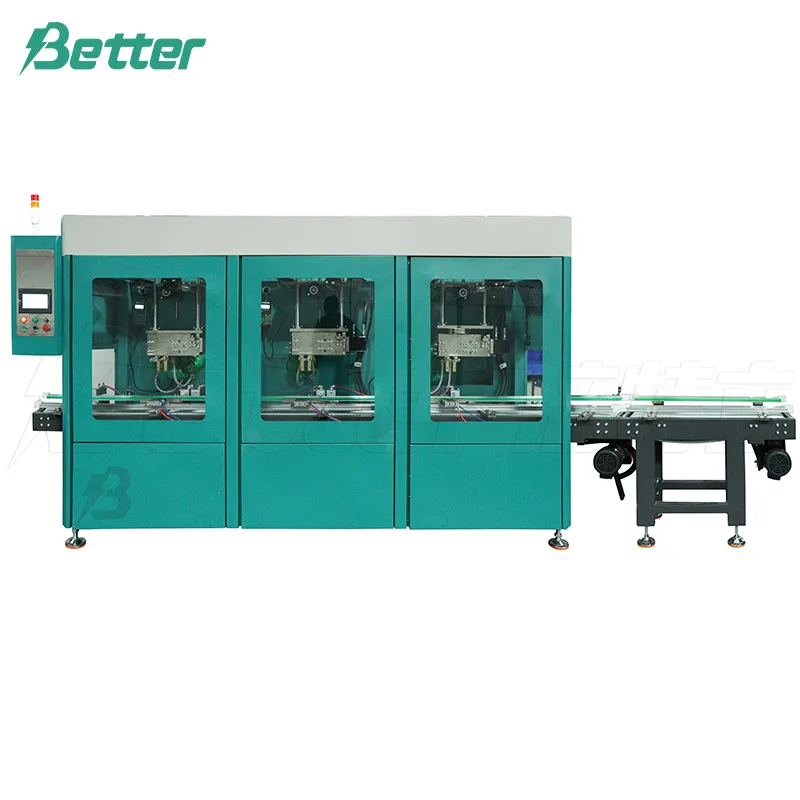
To achieve the highest standards in Battery production, we highly recommend the Automatic Intercell Welding Machine (3 heads, Hydraulic) from Better Technology Group Limited. This outstanding piece of equipment is specifically designed for the inter-cell welding of 32Ah to 200AH Car Batteries. It utilizes photoelectric sensors for automatic positioning, ensuring incredible accuracy. The machine features a Mitsubishi PLC and a MIYACHI controller, allowing for fully automated computer control of the entire welding process and parameters. With its ability to automatically compensate for voltage fluctuations and maintain constant current and energy, it guarantees a perfect weld every time. For any manufacturer looking to boost production capacity and ensure the highest quality Intercell Welding, this machine is the ultimate solution.