Why Do Batteries Explode? The Role of Quality Control
2026-02-28 14:27Table of Contents
Understanding Thermal Runaway
When we talk about battery explosions, the scientific term most often used is thermal runaway. This is a chain reaction within a battery cell where an increase in temperature changes the conditions in a way that causes a further increase in temperature, often leading to a destructive result. In simple terms, the battery generates heat faster than it can dissipate it. Once the internal temperature reaches a certain threshold—typically around 130°C to 150°C—the separator between the anode and cathode begins to melt, causing a massive energy release. This process happens in seconds, and once it starts, it is nearly impossible to stop without specialized fire suppression.
The Danger of Internal Short Circuits
An internal short circuit is the primary silent killer of batteries. It occurs when the positive and negative electrodes make direct contact inside the cell. Under normal circumstances, a thin porous membrane called a separator keeps them apart while allowing ions to flow. However, if this membrane is breached due to a mechanical impact or a manufacturing flaw, the electricity flows through a path of least resistance. This concentrated flow of current creates a "hot spot." Because the energy density in modern lithium-ion or high-capacity lead-acid batteries is so high, even a microscopic breach can lead to a total failure of the cell.
External Stress and Environmental Impact
Batteries are sensitive to their surroundings. Physical damage, such as piercing or crushing a battery pack, is an obvious cause of combustion. However, environmental heat is just as dangerous. Storing batteries in high-temperature warehouses or near machinery that generates heat degrades the chemical stability of the electrolyte. For lead-acid batteries, excessive heat leads to water loss and "thermal bulge," where the casing expands. For lithium batteries, heat accelerates the growth of SEI (Solid Electrolyte Interphase) layers, which eventually increases internal resistance and makes the battery more prone to overheating during use.
Charging Cycles and Voltage Management
The charging process is when a battery is at its most vulnerable. Overcharging occurs when the charging voltage is pushed beyond the battery's specified limit. This forces excess ions into the electrode structure, causing it to become unstable. In lead-acid systems, overcharging leads to the electrolysis of water, releasing flammable hydrogen gas. In lithium batteries, it can cause "lithium plating," where metallic lithium forms on the surface of the anode. These metallic deposits are sharp and can eventually puncture the separator, leading back to the internal short circuit mentioned earlier. Using a high-quality Battery Management System (BMS) is the first line of defense, but the physical battery must be built to handle these stresses.
Manufacturing Defects and Impurities
Many battery failures can be traced back to the cleanroom—or lack thereof—during the manufacturing stage. Tiny dust particles or metallic shavings (burrs) introduced during the assembly process might not cause a failure immediately. Instead, they act as "seeds" for trouble. Over dozens of charge and discharge cycles, these impurities can migrate or cause localized stress on the cell's internal structure. This is why high-end battery manufacturers invest heavily in dust-free environments and automated inspection systems. A single microscopic metal fragment is enough to turn a high-performance battery into a safety hazard months after it leaves the factory.
The Importance of Lead-Part Welding
In the world of industrial batteries, the way internal components are joined together is vital. In lead-acid battery production, "through-the-wall" welding is used to connect cells. If this weld is weak, inconsistent, or contains voids, it creates high electrical resistance. When a high current is drawn from the battery—such as starting an engine—the weak weld point will heat up rapidly. If the temperature at the weld point reaches the melting point of lead or ignites surrounding gases, the battery can explode. Consistent welding depth and pressure are the two most critical parameters that determine whether a battery is a reliable power source or a ticking time bomb.
Global Quality Control Standards
Safety is not an accident; it is the result of rigorous testing protocols. Reliable batteries undergo a battery of tests including vibration, mechanical shock, external short-circuit simulation, and extreme temperature cycling. For B2B buyers, verifying that a supplier uses automated testing is crucial. Manual inspection is prone to human error, especially in high-volume production lines. Automation ensures that every single unit meets the exact same safety threshold. Data logging during the assembly process allows manufacturers to trace a failed unit back to the specific minute it was produced, identifying if a batch of raw materials was faulty or if a machine calibration shifted.
Optimizing Production with Advanced Technology
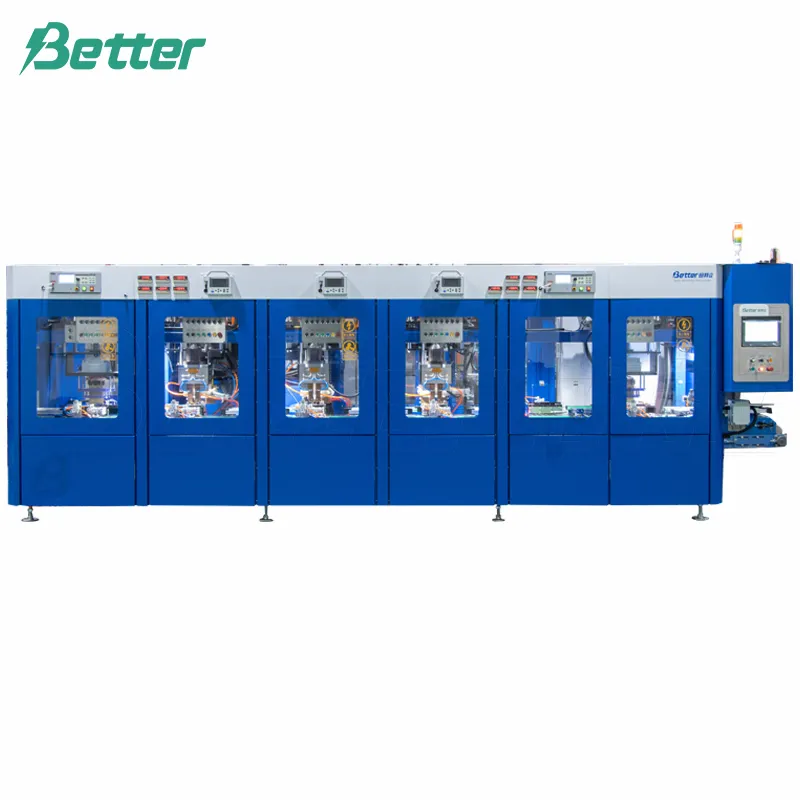
To prevent the risks associated with poor internal connections and welding defects, top-tier manufacturers rely on integrated solutions like the Fully automatic CNC Through-Wall Welding Inspection Machine from Better Technology Group Limited. This advanced system streamlines the production of lead-acid batteries by combining precise NC (Numerical Control) welding with immediate quality inspection. By automating the through-the-wall welding process, the machine ensures 100% consistency in weld strength, significantly reducing the risk of internal resistance and accidental combustion. Its real-time monitoring capabilities catch defects that the human eye would miss, ensuring that every battery leaving the line is optimized for safety and long-term performance. For companies looking to upgrade their production safety and efficiency, this all-in-one solution provides the technical precision necessary to compete in the global market.