Why Cast-on-Strap Is Critical for Automotive Battery Performance
2026-05-11 15:17Table of Contents
1. What Is Cast-on-Strap (COS) and Why It Matters
2. COS vs. Manual Welding: Key Differences
3. Common Battery Failures Linked to Strap Quality
4. How COS Improves Battery Manufacturing
5. Recommended COS Equipment for Reliable Production
What Is Cast-on-Strap (COS) and Why It Matters
Cast-on-Strap (COS) is a core manufacturing process for lead-acid batteries where molten lead alloy is poured into a mold to form the bus bar that connects individual plates into a group. Unlike manual welding, which joins parts with a torch, COS creates a single, solid metal strap that locks the plate lugs in place. This internal connection is critical because it acts as the main highway for electrical current inside the battery. A poorly made strap increases internal resistance, causing voltage drops, heat buildup, and ultimately, premature battery death. For automotive batteries that face constant vibration and high-crank demands, the mechanical strength and electrical consistency provided by a high-quality COS process are non-negotiable for performance and safety.
COS vs. Manual Welding: Key Differences
Many older or low-cost batteries still use manual gas welding, where a worker melts lead wire to fuse the plates together. This method is highly dependent on operator skill and is prone to human error. Common issues include inconsistent fusion, excessive heat affecting the active material, and voids or slag inclusions that weaken the connection. In contrast, the COS process is automated and repeatable. It ensures complete encapsulation of the plate lugs, creating a larger contact area and a more homogeneous metallic structure. This results in lower electrical resistance and superior current-carrying capacity. For the end-user, this translates to a battery that starts the car more reliably in cold weather and has a longer service life due to reduced corrosion at the connection points.
Common Battery Failures Linked to Strap Quality
If you've ever had a battery that suddenly died or couldn't hold a charge, the root cause might have been a faulty internal strap. The two most frequent failure modes related to strap welding are high-resistance connections (hot spots) and mechanical fractures. High resistance occurs when the connection between the plate and the strap is imperfect, often due to oxidation or poor fusion. This spot heats up during high-current discharge (like starting an engine), accelerating corrosion and leading to a sudden open circuit. Mechanical fractures happen when the strap or weld is brittle and cannot withstand the vibration from daily driving. A properly executed COS process significantly reduces these risks by creating a robust, one-piece connection that is less susceptible to fatigue and corrosion compared to a hand-welded joint.
How COS Improves Battery Manufacturing
From a production standpoint, COS technology brings crucial benefits that directly impact battery quality and cost. It allows for precise control over the alloy composition and the geometry of the bus bar, which is vital for optimizing current flow. The automation of the COS process also eliminates variability between units, ensuring every battery that comes off the line has the same high standard of internal construction. This consistency is key for meeting the stringent requirements of automotive OEMs. Furthermore, modern COS machines integrate flux dipping and brushing stations that clean the plate lugs before casting, ensuring a perfect metallurgical bond. This level of control is difficult to achieve consistently with manual labor, making COS the industry standard for high-performance battery manufacturing.
Recommended COS Equipment for Reliable Production
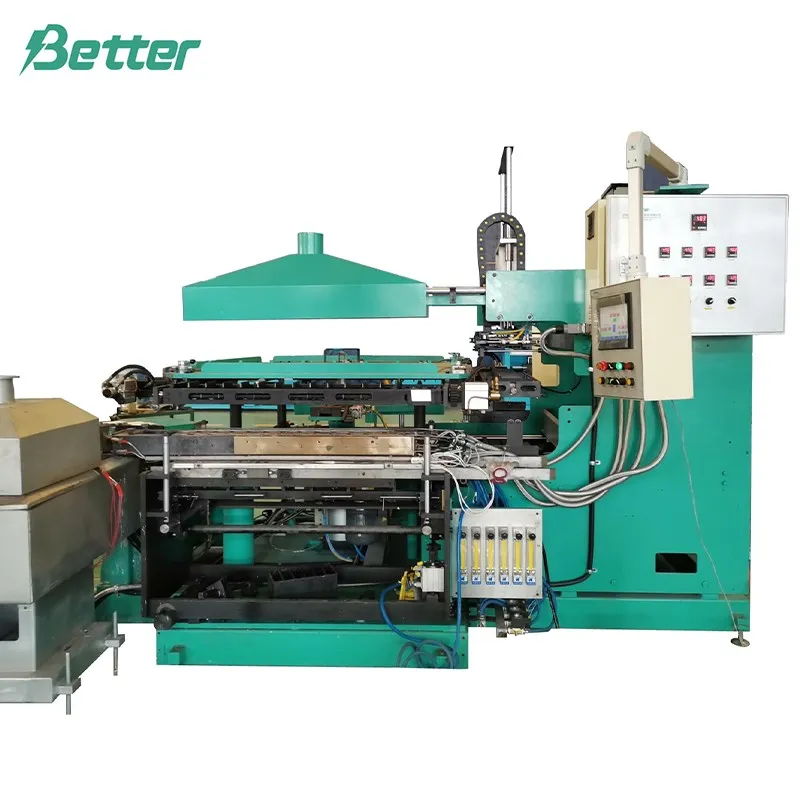
For manufacturers aiming to produce reliable automotive batteries, investing in a high-quality Four-Station COS Machine is a strategic decision. The Four Station COS Machine from Better-Tech, is designed specifically for this purpose. It handles the standard automotive battery range (12V 36Ah-200Ah) efficiently, with a cycle time of just 20-22 seconds for starter batteries. Key features that enhance reliability include the PLC control system (using Mitsubishi components) for precise operation, an automatic flux dipping and brushing station to ensure clean connections, and a 1000kg lead pot that maintains stable alloy temperature for consistent casting quality. The optional automatic copper terminal placement is a valuable add-on for enhancing conductivity in premium battery lines. This machine's design, which includes a closed-loop water recycling system, not only ensures high-quality strap casting but also improves production efficiency and reduces operational costs, making it a recommended solution for any serious battery production facility.