Common Mistakes When Choosing a Home Energy Storage System
2026-07-03 14:02Table of Contents
1. Sizing Your System Incorrectly
2. Choosing the Wrong Battery Chemistry
3. Overlooking Backup Power Capability
4. Ignoring Expandability and Future Needs
5. Not Understanding What the Warranty Actually Covers
6. Focusing Only on Price Instead of Total Value
Sizing Your System Incorrectly
Getting the size wrong is probably the most common mistake people make with a home energy storage system. Some homeowners buy a battery that's too small and find themselves running out of power before the night is over. Others go too big and end up paying for capacity they rarely use. Neither scenario is ideal.
Here's what actually matters: size your system based on your actual daily energy consumption and the specific appliances you need to keep running during an outage. Review your electricity bills to see your average daily usage in kilowatt-hours. Then think about what you absolutely need during a blackout—refrigerator, lights, Wi-Fi, maybe a medical device. That's your baseline.
A system that's too small will cycle deeply every day, which accelerates battery degradation. A system that's too large sits partially unused, and you've spent money on storage you don't need. The sweet spot is a system that covers your essential overnight usage with a bit of margin, not one that tries to power everything in your house at once.
Choosing the Wrong Battery Chemistry
Not all batteries are built the same way, and the chemistry inside makes a huge difference in safety, lifespan, and performance. Many homeowners don't realize there are different types of lithium batteries, and they pick the wrong one for residential use.
For a home energy storage system, Lithium Iron Phosphate (LiFePO₄) is widely considered the safest choice. Unlike other lithium chemistries that use cobalt, LiFePO₄ has a stronger chemical structure that makes it much less likely to experience thermal runaway—the dangerous overheating that can lead to fires. LiFePO₄ cells are also more stable across a wide temperature range, which matters when your system sits in a garage or against an exterior wall.
Lead-acid batteries might look cheaper upfront, but they require regular maintenance, have shorter lifespans, and can't be discharged as deeply. They're a false economy for most homeowners. If you're investing in a home battery storage system, start with LiFePO₄ and work from there.
Overlooking Backup Power Capability
Here's something that catches a lot of people off guard: not every home energy storage system provides backup power during an outage. Some systems are designed only for energy shifting—charging when electricity is cheap and discharging when it's expensive—but they won't keep your lights on when the grid goes down.
If backup power matters to you, you need to confirm this explicitly before buying. Ask what circuits will be backed up, how long the battery can sustain them, and whether the system can switch over automatically. Some systems require manual switching, which defeats the purpose if you're not home when the outage happens.
Also pay attention to the inverter's output power, not just the battery's storage capacity. You might have 10 kWh of stored energy, but if your inverter can only deliver 3 kW at once, you won't be able to start your air conditioner or well pump. Look at both the energy (kWh) and the power (kW) ratings—they tell two different stories about what the system can actually do.
Ignoring Expandability and Future Needs
Your energy needs today probably won't be the same as your energy needs five years from now. Maybe you'll buy an electric vehicle. Maybe you'll add more solar panels. Maybe your family grows and your electricity consumption goes up.
Some home energy storage systems are locked into a fixed size—what you buy is what you get, and expanding later means replacing the whole thing. That's expensive and wasteful. Choose a system with modular design and expansion-ready interfaces so you can add more battery capacity as your needs change.
This is especially important if you're installing solar alongside your battery. Your solar array might produce more than your current battery can store, and you'll want the option to increase storage later without starting from scratch.
Not Understanding What the Warranty Actually Covers
A 10-year warranty sounds great. But what does it actually cover? Many homeowners don't read the fine print, and they're surprised when a claim gets denied.
Here are the details you need to check: throughput limits (the total amount of energy the battery can deliver over its lifetime before the warranty expires), cycle count (how many full charge/discharge cycles are guaranteed), and capacity retention (what percentage of original capacity the battery will still have after the warranty period—usually 70-80%).
Also check who pays for labor, shipping, and reinstallation if the battery needs to be replaced. Some warranties cover the replacement unit but leave you covering the rest. A cheap battery with a weak warranty often ends up being the most expensive option in the long run.
Focusing Only on Price Instead of Total Value
It's tempting to pick the cheapest home energy storage system you can find. But price tags can be deceiving. A low-cost system might have lower efficiency (meaning more energy is wasted during charging and discharging), a shorter lifespan, limited software support, or poor integration with your existing solar setup.
Think about the total cost over the system's lifetime, not just the upfront price. A slightly more expensive system with higher round-trip efficiency, longer cycle life, and better warranty terms will often save you money in the long run.
Also consider ease of installation and maintenance. Some systems require complex on-site assembly and professional commissioning. Others come as all-in-one units that are simpler to set up and monitor. The less time and money you spend keeping the system running, the better your return on investment.
A Smarter Choice for Your Home
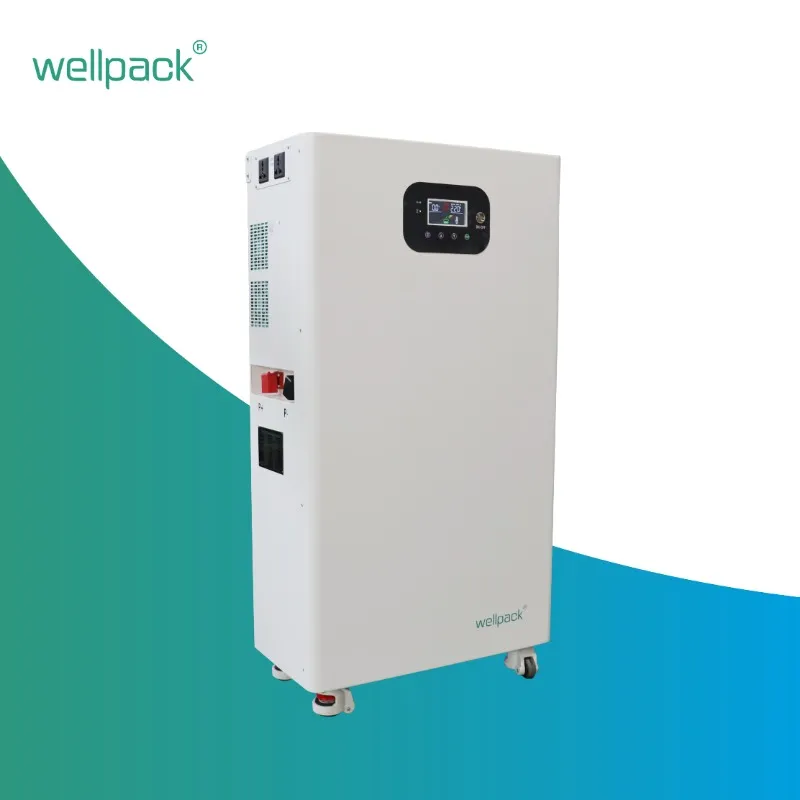
If you're looking for a home energy storage system that avoids all the pitfalls above, the WPH10I-02 all-in-one unit from Better Tech is worth a close look. It integrates the battery and inverter into a single compact cabinet with no on-site assembly required—just plug-and-play wiring. Built with brand-new Grade-A LiFePO₄ battery cells and an intelligent Battery Management System (BMS) with comprehensive protection against overcharge, over-discharge, overcurrent, short circuits, and temperature extremes, it delivers both safety and reliability. The modular design supports easy capacity expansion as your needs grow, and built-in casters make it surprisingly mobile for a system of its size. With 10.54 kWh of rated energy and a 6 kW pure sine wave inverter, it provides stable, clean power for your essential home loads. If you want a system that's safe, expandable, and simple to own—without the headaches of complex installation—this is one to put on your shortlist.