The Role of Acid Electrolyte in Lead-Acid Battery Performance
2026-06-09 15:18Table of Contents
What is Acid Electrolyte and What Does It Do?
Inside every lead-acid battery, the key ingredient that makes it work is a liquid called the electrolyte. It is a mixture of sulfuric acid and distilled water. Think of it as the blood of the battery; it must flow and interact properly for the system to function. Its primary job is to conduct electricity between the battery's two main parts: the positive plate (lead dioxide) and the negative plate (spongy lead). This is the fundamental process that allows a battery to store and release electrical energy. When you discharge the battery, the acid in the electrolyte reacts with the plates. Sulfuric acid gets consumed, and the plates turn into lead sulfate. Simultaneously, the electrolyte becomes weaker, more like water. When you charge the battery, this process reverses. The charger pushes electricity back in, which forces the chemical reactions to go backwards. The lead sulfate on the plates breaks down, sulfuric acid is re-formed and released back into the electrolyte, and the plates are restored. This cycle of acid concentration going up and down is the heartbeat of the battery's operation. The strength, or specific gravity, of the acid is a direct indicator of the battery's state of charge. A fully charged battery will have a high concentration of sulfuric acid, while a discharged one will have a much lower concentration. Without this active, circulating acid, there is no chemical reaction, and therefore no electricity can be produced or stored.
How to Know if Your Battery's Electrolyte is in Good Condition?
For users with serviceable batteries (those with removable caps), checking the electrolyte is the most direct way to assess battery health. The two most critical things to look at are the level and the strength. First, the electrolyte level must always cover the top of the battery's internal plates. If the level is too low, the exposed parts of the plates will dry out and sulfate permanently, drastically reducing capacity. Water loss occurs naturally during charging, so you should periodically top it up with distilled water only, never tap water or more acid. Second, the strength of the acid is measured with a tool called a hydrometer. It gives a reading called specific gravity. For a standard, fully charged battery at room temperature, this reading should typically be around 1.265. As the battery discharges, this number drops. If you find that even after a full charge, the specific gravity readings are low and uneven between cells, it often indicates the battery is aging or has permanent damage like sulfation. Another clear visual sign of trouble is if the electrolyte appears murky or discolored. Normally, it should be clear. A brown or black tint usually means the battery plates are shedding active material, which is a sign of advanced wear or overcharging. Monitoring these simple factors gives you a real-time report on your battery's internal state.
Simple Tips to Care for Your Lead-Acid Battery's Electrolyte
Proper care of the electrolyte extends your battery's life significantly. The most important rule is to maintain the correct water level. Check it regularly, especially in hot weather or during periods of heavy use, and add distilled water as needed. Always charge the battery in a well-ventilated area because the charging process produces hydrogen and oxygen gases, which are explosive. Avoid overcharging, as this causes excessive gassing and boils off the water in the electrolyte very quickly, leaving the plates exposed. Conversely, avoid deep discharges. Letting a battery sit in a deeply discharged state allows the soft lead sulfate crystals on the plates to harden into large, stable crystals—a condition known as sulfation. These large crystals block the pores of the plates and cannot be easily converted back during charging, permanently reducing capacity. For batteries in storage, keep them fully charged. A battery left in a partially discharged state will sulfate quickly. Temperature also matters. High ambient temperatures accelerate all chemical reactions, including the ones that cause the electrolyte to lose water and the grids to corrode faster. Keeping batteries in a cool, dry place helps. These practices center on managing the electrolyte's condition, which directly manages the battery's lifespan.
Why Do Lead-Acid Batteries Fail? The Electrolyte's Role
Most premature failures of lead-acid batteries can be traced back to problems that started with the electrolyte. The most common failure mode is sulfation, as mentioned. It is the gradual killer that slowly robs a battery of its usable capacity. Another major issue is grid corrosion. Over time, the positive plate's grid metal reacts with the strong acid and oxygen, slowly converting it into a different, less conductive oxide. This process is natural but accelerated by overcharging and high temperatures. As the grid corrodes, it loses its ability to conduct current effectively. Stratification is a less obvious but damaging problem. In batteries that are rarely fully cycled (like those in standby power applications), the heavy sulfuric acid can sink to the bottom of the cell. This creates a strong acid layer at the bottom that corrodes the plates faster, and a weak acid layer at the top that can freeze more easily. This uneven concentration leads to poor performance and uneven wear. Finally, loss of electrolyte, primarily from overcharging leading to excessive water loss, leaves the plates exposed and dry. Once exposed to air, the plates sulfatize rapidly and irreversibly. Understanding these failure points highlights why proper charging, watering, and storage—all electrolyte-centric practices—are so crucial for longevity.
The First Step Matters: Why Precise Acid Filling in Manufacturing is Key
All the potential issues users face during a battery's life can be influenced by its very first moment of activation: the initial acid filling during production. In the factory, after the dry, unformed plates are assembled into a case, sulfuric acid electrolyte is injected. The precision of this step is critical. If the amount of acid filled into each battery cell is not consistent, it creates immediate imbalances. One cell might have slightly more or less acid than its neighbors. This leads to variations in the initial chemical reactions during the first charge, called formation. Cells with uneven acid volumes will develop slightly different internal resistances and capacities from the very beginning. Over the battery's life, these small manufacturing variations are amplified through every charge and discharge cycle, potentially leading to one weak cell failing and dragging down the entire battery. The accuracy of the acid volume, its distribution, and the consistency of the process directly affect the initial quality, performance uniformity, and the baseline from which the battery starts its aging process. Therefore, the equipment used for this step is foundational to building a reliable product.
A Reliable Tool for Consistent Battery Manufacturing
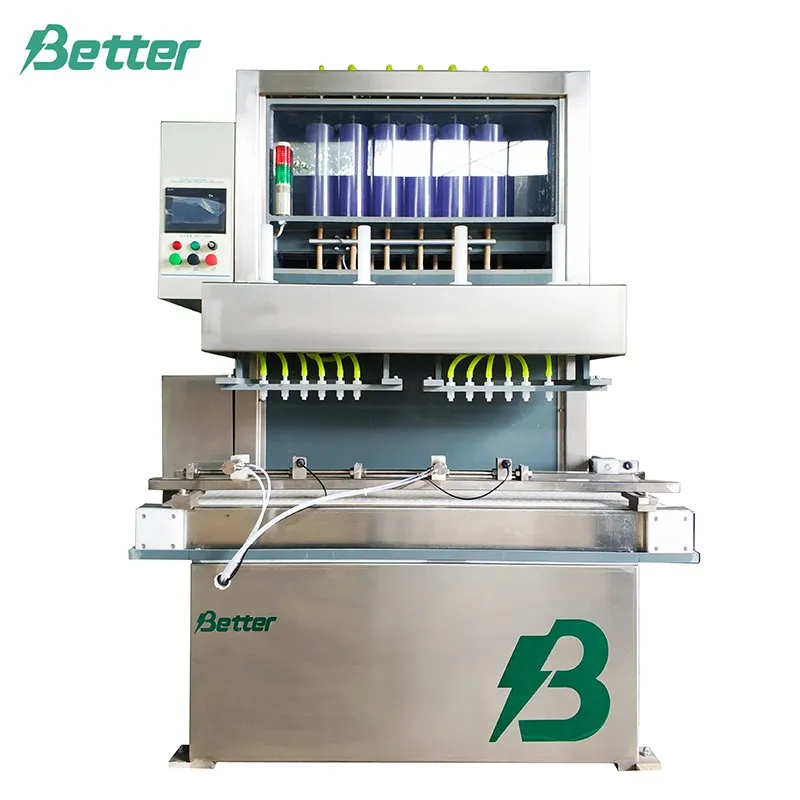
To achieve the high precision and consistency required in modern battery production, specialized machinery is essential. The Automatic Lead-Acid Battery Acid Filling Machine featured on BetterTech's page is designed for exactly this critical stage. This machine automates the process of filling electrolyte into battery cases before the formation charge, specifically for automotive batteries ranging from 32Ah to 200Ah. Its core advantage lies in its digital control and automation. The system uses a programmable logic controller (PLC) and a touch screen interface, allowing operators to pre-set the exact acid volume for different battery models. The machine then executes the fill with a high degree of accuracy, rated at ±1% F.S. (full scale), ensuring each cell receives a nearly identical amount of acid. The 12-head design allows for efficient production, handling two batteries simultaneously with an output of 120 units per hour, streamlining the workflow. The use of corrosion-resistant materials like PVC or stainless steel in its construction ensures durability in a challenging factory environment. For any manufacturer prioritizing battery quality, uniformity, and production efficiency, investing in such a precise and automated acid filling system is a recommended step. It directly addresses the root cause of performance variation by guaranteeing that every battery starts its life with a perfectly measured and consistent foundation of electrolyte, which translates into more reliable products for the end-user.